Billy Waugh: The Soldier Who Never Stopped Fighting
SOG veteran, CIA paramilitary officer, bin Laden tracker — a career that spanned six decades and never fully ended
Billy Waugh served longer in special operations than most soldiers serve in the military. A Green Beret who spent seven and a half years behind enemy lines in Vietnam, he left the Army in 1972 — eight Purple Hearts and a Silver Star later — and went directly into the CIA, where he spent another three decades hunting terrorists across four continents. He had Osama bin Laden in his sights in Sudan in the early 1990s and wasn't allowed to take the shot. At age 72, he was in Afghanistan hunting him again. He died in April 2023 at 93. Per his wishes, a HALO jump team scattered his ashes over the Raeford Drop Zone in North Carolina.
By War & Fiction · Editorial standards and corrections
The Career That Shouldn't Have Been Possible
Billy Waugh enlisted in the Army in 1950 and didn't stop working for the United States government until he was in his mid-seventies. The math is staggering when you lay it out: Korea, then Special Forces in the late 1950s, then Vietnam — seven and a half years of it, longer than almost any other American soldier in the war. Then the CIA, where he spent another three decades in places the agency doesn't officially acknowledge sending people. He was hunting Osama bin Laden in Sudan in the early 1990s. He was in Tora Bora in 2001, at 72 years old, doing the same job he'd been doing since Eisenhower was president.
He left the Army in 1972 with eight Purple Hearts — a figure that represents not bad luck but the particular arithmetic of spending years in direct contact with the enemy. He had a Silver Star. He had wounds. He had no interest whatsoever in stopping.
MACV-SOG: The War Behind the War
Waugh was Command Sergeant Major of MACV-SOG — the Military Assistance Command Vietnam Studies and Observations Group, the classified special operations organisation running cross-border missions into Laos, Cambodia, and North Vietnam throughout the war. SOG was the American military's deepest covert instrument in Vietnam. Its Recon Teams — typically two Americans and four indigenous personnel — went into denied territory to gather intelligence, plant sensors, and occasionally snatch prisoners. The casualty rates were higher than almost any other unit in the war.
By the time Waugh served at that level, he had accumulated the kind of operational experience that made him genuinely irreplaceable in the field. He understood denied-area operations from the inside. He understood what small teams could do and what they couldn't. He understood, at a cellular level, the relationship between patience and violence that governs long-term surveillance and direct action work. The CIA, when it hired him after he left the Army, was buying something that couldn't be manufactured — it could only be accumulated over decades.
Bin Laden in Khartoum
In the early 1990s, Osama bin Laden was living in Sudan. He was building infrastructure, funding operations, and moving personnel, but he had not yet carried out the attacks that would make his name known in every American household. The CIA knew he was there. Waugh was sent to Khartoum to confirm it and conduct surveillance.
He did. He got close enough to kill him — his own words, later confirmed in accounts of that operation. He watched bin Laden jog through the streets of Khartoum on his morning runs. He tracked his movements, documented his contacts, built the surveillance picture that an operation would require. And he was not given authorisation to act.
This is the fact that defines how people remember Billy Waugh — not because it was his failure, but because it was the system's failure, and he was the one who had to watch it happen. The decision not to act on bin Laden in Khartoum was made at levels far above Waugh's. The reasons involved diplomatic considerations, legal questions about operating in a third country, and an intelligence community that had not yet fully internalised what al-Qaeda was becoming. Waugh knew exactly what he was looking at. He wasn't allowed to do anything about it.
Carlos the Jackal
The operation that did succeed was the capture of Ilich Ramírez Sánchez — Carlos the Jackal — in Sudan in 1994. Carlos was one of the most wanted terrorists in the world, responsible for bombings and assassinations across Europe and the Middle East through the 1970s and 1980s. He had been living in Khartoum under Sudanese government protection.
Waugh's surveillance of Carlos — the same patient, methodical work he had applied to bin Laden — provided the intelligence picture that allowed French intelligence to locate and arrest him. The full story of how that happened, and Waugh's specific role in it, is told in his memoir. It was, by any standard, a successful operation. Carlos is still in a French prison.
Afghanistan at 72
After September 11, 2001, the CIA deployed a rapid response to Afghanistan as part of Operation Enduring Freedom. Among the personnel who went in was Billy Waugh, then 72 years old. He was hunting bin Laden again — this time in the mountains of Tora Bora and the high plains of Afghanistan rather than the streets of Khartoum.
The fact that the agency sent him, and that he went, says something about both. Waugh had the kind of institutional knowledge and operational judgment that doesn't exist in training manuals. He had been doing this since before most of the people around him were born. The physical demands of operating in the Afghan highlands are extreme for men a third his age. He went anyway, did the job, and came back.
What the Books Capture
Waugh's memoir, Hunting the Jackal, written with Tim Keown, is the primary source on his career and one of the more unusual documents in the literature of American special operations — a first-person account by someone who was genuinely in the room for three of the defining covert stories of the late twentieth century. It reads with the directness you'd expect from a man who spent his career doing things rather than talking about them.
The Plaster book on MACV-SOG gives the institutional context for Waugh's Vietnam years — the world SOG built, the missions it ran, the men it created. Licensed to Kill, Robert Young Pelton's account of private military contractors in the war on terror, contains direct interviews with Waugh that connect his CIA work more explicitly than he does in his own memoir.
Waugh died on April 4, 2023, at 93. His ashes were scattered by a HALO jump team over the Raeford Drop Zone in North Carolina — the appropriate ending for a man who jumped out of aircraft for six decades and saw no reason to stop.
READ NEXT — BOOKS ON THIS OPERATION
Amazon and Audible links are provided for convenience; we do not earn commissions from these purchases.

Hunting the Jackal
Billy Waugh & Tim Keown
Waugh's own memoir — Vietnam, Carlos the Jackal, bin Laden in Khartoum, Afghanistan at 72. The only primary source on a career that spanned more than fifty years of American covert operations. Essential.
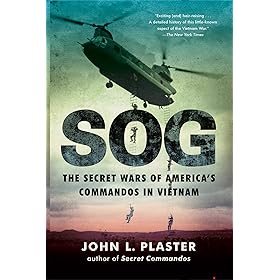
SOG: The Secret Wars of America's Commandos in Vietnam
John L. Plaster
Waugh was Command Sergeant Major of MACV-SOG. Plaster's history of the organisation is the deepest account of the world Waugh operated in — the cross-border missions, the Recon Teams, the men SOG shaped.
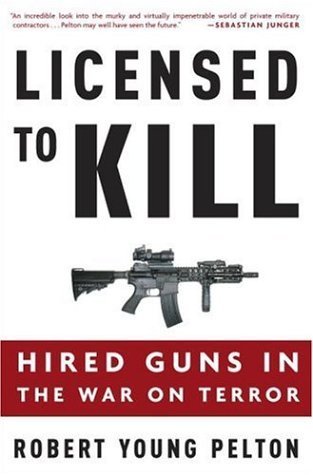
Licensed to Kill: Hired Guns in the War on Terror
Robert Young Pelton
Pelton interviewed Waugh directly — his account connects Waugh's surveillance of bin Laden in Khartoum to the hunt in Afghanistan a decade later. The most direct outside account of what Waugh was doing in his CIA years.