If You Play D&D, You Need to Read Forgotten Ruin
A Black Hawk Down meets Dungeons & Dragons mashup that somehow works — and what it means for both fandoms
Forgotten Ruin is explicitly billed as 'Dungeons & Dragons in a military unit.' Jason Anspach and Nick Cole drop a Ranger company from the 75th Ranger Regiment into a fantasy world where the monsters have D&D stat blocks, the magic system uses D&D logic, and the narrator — a PFC language specialist called Talker — documents tactical operations that are simultaneously militarily realistic and straight out of a dungeon crawl. It's the perfect entry point for D&D players discovering military fiction and military fiction readers discovering D&D.
Forgotten Ruin is explicitly billed as "Dungeons & Dragons in a military unit." That's not marketing hyperbole. It's a precise description of what Jason Anspach and Nick Cole have done — taken the mechanics, the monsters, and the magic system of tabletop gaming's most dominant ruleset and dropped them onto a Ranger company from the 75th Ranger Regiment transported to a fantasy world. The result is a book series that sits perfectly at the intersection of two audiences who rarely read the same fiction: people who play D&D and people who read military fiction.
If you've spent hundreds of hours rolling initiative in a fantasy tavern while Dungeon Masters hurled ogres and dragons at your party, Forgotten Ruin feels like coming home. If you've read Black Hawk Down or Rogue Warrior and never understood the D&D appeal, Forgotten Ruin makes the connection explicit. If you're searching for "military D&D book" or "D&D in military fiction," this is the book people are referring to.
What Actually Happens in Forgotten Ruin
A Ranger company from the 75th Ranger Regiment — around 120 combat soldiers — gets transported to a sword-and-sorcery world that operates on D&D game mechanics. Orcs, elves, dwarves, and gnomes exist. Magic works according to D&D spell lists. Monsters have D&D stat blocks. The story is narrated by Talker, a PFC language specialist attached to the company, who documents tactical operations that are simultaneously military-realistic and straight out of a dungeon crawl. They fight what amounts to a combined arms campaign in a world where goblins are organized in hierarchies, where ruins hold genuine treasure, and where the magic system has consistent rules instead of the hand-wavy "anything goes" approach of most fantasy fiction.
This is where Forgotten Ruin achieves something genuinely rare: it takes the mechanics of D&D seriously without ever feeling like it's explaining the rules to you. A ranger knows what a fireball spell does. An orc fighter's AC (armor class) and hit points are mentioned casually because the soldiers understand those concepts from their military training and tactics mindset. The reader never has to learn D&D to understand what's happening. The reader who plays D&D understands immediately why certain tactical decisions make sense.
Why It Works for D&D Players
D&D players have spent decades sitting in rooms listening to Dungeon Masters describe tactical scenarios, roll initiative, and resolve combat. They know what a CR (challenge rating) is. They understand that a monster with 8 hit dice is substantially more dangerous than one with 2. They've debated initiative order, discussed armor class optimization, and argued about spell slot management. Forgotten Ruin validates all of that. The fantasy world operates on rules they already know. The combat encounters feel internally consistent because they are — internally consistent with D&D mechanics, anyway.
More importantly, Forgotten Ruin answers a question that's been implicit in tabletop gaming forever: what would happen if professional soldiers — people trained in combined arms tactics, in fire and maneuver, in casualty management and command structure — actually encountered D&D monsters? The answer isn't "they'd easily defeat them," because D&D players understand threat assessment and know that a properly scaled monster is a properly scaled monster. The answer is "they'd adapt their military doctrine to a fantasy world and keep doing what military organizations do: execute the mission and bring their people home."
The Rangers don't change the fundamental approach. They establish perimeter security. They call in supporting fire. They practice fire discipline. They plan ambushes. They understand that a creature with resistance to nonmagical weapons is a problem that requires adjusting the ROE (rules of engagement). These aren't soldiers fumbling around in a dungeon. They're soldiers conducting operations in a world where the physics work differently.
Why It Works for Military Fiction Readers
The military fiction reader comes to Forgotten Ruin looking for tactical realism, authentic unit dynamics, and the kind of voice that comes from someone who understands military structure. That reader gets all of it. The squad-level tactics are sound. The radio communications follow military protocol. The chain of command operates like an actual military command structure, with all the friction and communication challenges that entails. Talker narrates from the ground level — a junior soldier close enough to the action to see everything, far enough from command to give the reader an honest, unfiltered account.
The voice is authentic. Anspach and Cole write military characters who sound like military people because they understand military people. There are no unnecessary exposition dumps about how snipers work or what a radio net is. Soldiers talk the way soldiers talk. The hierarchy is real — sergeants do their job, officers give orders, and the friction between what's tactically possible and what's politically acceptable exists in a fantasy world just like it does in Black Hawk Down.
What separates Forgotten Ruin from standard military fiction is that the mission isn't in Afghanistan or Iraq or Vietnam. It's in a world where goblins run organized military formations, where magic is a genuine combat multiplier that has to be managed like any other fire support asset, and where the intelligence picture includes spell capabilities and magic item distribution. The military fiction reader doesn't have to understand D&D to find this compelling. The reader just has to understand that soldiers adapt to whatever environment they're deployed to. And these soldiers are being deployed to a world where the environment includes elves with longbows.
The Crossover Audience
The real audience for Forgotten Ruin is the reader who's done both things: played D&D for years and also appreciated military fiction. You know what a ranger is and what a rogue's sneak attack means. You also understand the difference between fantasy cliche and actual tactical thinking. You've wanted to read a story where people approach a dungeon the way a JSOC element approaches a compound. Where the party composition matters because magic-users and front-line combatants fill different roles in the command structure. Where someone actually asks "what's our exit strategy?" before the raid goes live.
Forgotten Ruin satisfies both parts of that sensibility. It's written with the tactical precision of military fiction and the internal consistency of good tabletop gaming. A Ranger company conducts what amounts to a dungeon crawl campaign in a fantasy world, and both the military logic and the D&D logic work simultaneously.
Why the Magic System Matters
A lot of fantasy fiction treats magic as a tool that does whatever the plot requires. Forgotten Ruin treats magic the way D&D does: as a system with limitations. Spellcasters have spell slots. They recover spellcasting ability on a rest cycle. Leveling up provides new capabilities. Magic becomes a genuine operational consideration — a fire support asset with a finite magazine. You can't call it in unlimited times. You manage your resources. The military thinking and the D&D thinking converge perfectly.
This matters because it means combat encounters feel consequential in a way they often don't in fantasy fiction. The characters can't simply escalate firepower infinitely. They have to be smart about engagement. They have to think about reserves and contingencies. It reads like actual military planning instead of "and then the wizard cast fireball until the problem went away."
What to Read Next
If you came to Forgotten Ruin from tabletop gaming and are now interested in military fiction: start with Galaxy's Edge Book 1 by Anspach and Cole. It's the same creative team, but in a military sci-fi setting instead of fantasy. The tactical thinking is equally rigorous, the military voice is the same, and there's no D&D framework to carry you. It's pure military science fiction. If Galaxy's Edge works for you, you're ready for the heavier stuff: Mark Bowden's Black Hawk Down, Dick Couch's Warrior Elite, or the special operations memoirs by SEALs and Delta operators. You'll read them differently now — with an understanding of how experienced soldiers think about tactical problems and command structure.
If you came to Forgotten Ruin from military fiction and are now curious about D&D: read the Spellmonger series by Terry Mancour. It's a different approach — a D&D-based world with deep magic system worldbuilding, seen through the eyes of someone who starts as an ordinary soldier and becomes a mage. It won't have the military unit cohesion that Forgotten Ruin does, but it will give you a fantasy world where the magic system has genuine depth and consistency. The Spellmonger books are doing something similar to Forgotten Ruin — building a believable, internally consistent world where magic has limits and costs — but from the perspective of someone learning the system rather than adapting military doctrine to it.
The Search Results That Lead Here
People searching "D&D inspired military fiction" or "military fantasy" or "D&D in a modern military unit" or simply "forgotten ruin dungeons & dragons" all end up pointing at these books. The crossover is explicit enough that the series has become the place where tabletop gamers and military fiction readers discover each other. If you've ever played a campaign where you actually cared about the tactical considerations instead of just rolling dice, Forgotten Ruin will make sense to you immediately. If you've read military fiction and wondered what it would look like with fantasy elements treated seriously instead of as decoration, this is the answer. The Rangers don't become adventurers. They stay soldiers. They just happen to be conducting operations in a world where the physics work according to D&D game mechanics.
That intersection — professional soldiers approaching fantasy challenges with military logic, in a world where D&D mechanics are the actual rules — is what makes Forgotten Ruin click. It's the book that validates both parts of your reading life.
READ NEXT — BOOKS ON THIS OPERATION
Affiliate links — as an Amazon Associate we earn from qualifying purchases.
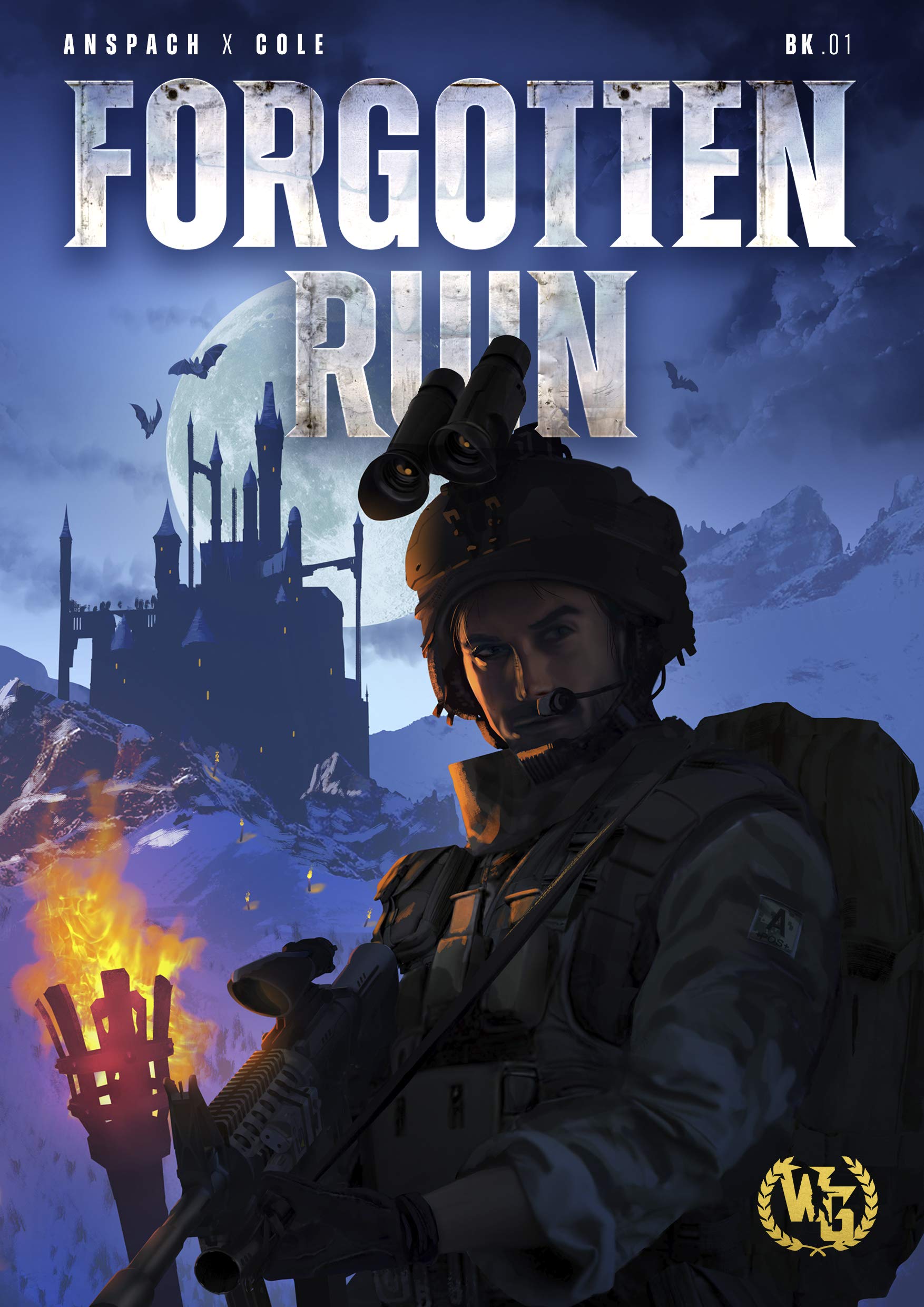
Forgotten Ruin Book 1: Old Growth
Jason Anspach & Nick Cole
The first volume in the series — a Ranger company from the 75th Ranger Regiment transported to a fantasy world where D&D mechanics are the actual rules. Narrated by Talker, a PFC language specialist documenting tactical operations that are both militarily sound and explicitly based on dungeon-delving logic.

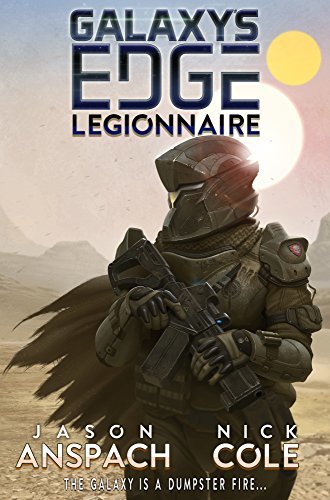
Galaxy's Edge Book 1: Legionnaire
Jason Anspach & Nick Cole
If Forgotten Ruin draws you to Anspach and Cole's work: Galaxy's Edge is their military sci-fi series with the same tactical precision and military authenticity, but in a far-future galaxy-spanning setting with no D&D framework. The natural next step for readers who came to them from military fiction.