Normandy, June 6, 1944
The largest amphibious assault in history — and the books that capture what it cost
In the early hours of June 6, 1944, more than 156,000 Allied troops crossed the English Channel toward five beaches on the coast of Normandy. Thousands of paratroopers had already dropped behind German lines in darkness. By nightfall, the Allies held a foothold — won at a cost that still defies easy comprehension. Omaha Beach alone saw roughly 2,000 American casualties in a single morning. D-Day was the turning point of the war in Western Europe, and arguably the most consequential single day of the twentieth century.
The Watch That Carries the Sand
Col&MacArthur is a Belgian watchmaker with an unusual philosophy: their commemorative timepieces contain actual fragments of the history they honour. The Normandie 1944 watch is their most significant piece — and the most literal. The dial incorporates a fragment of a genuine American M1 helmet worn during the liberation of Europe. A small capsule contains authentic sand from the Normandy beaches. The strap is cut from M1928 haversacks, the packs American troops carried ashore on June 6, 1944.
The watch is limited to 1,944 numbered units. The Miyota edition is priced at $699; the Swiss Sellita movement version runs $1,749. CNN featured it. The 4.8/5 rating across more than a thousand customer reviews reflects something beyond appreciation for the craft — it reflects what happens when an object carries genuine weight.
View the Normandie 1944 watch at Col&MacArthur →
June 6, 1944: Before Dawn
The airborne assault began after midnight. More than 13,000 American paratroopers of the 82nd and 101st Airborne Divisions dropped into Normandy in darkness — scattered by cloud cover, anti-aircraft fire, and pilots flying too fast over the drop zones. Men landed miles from their objectives, in flooded fields, in trees, on rooftops. Some drowned in water that was three feet deep. The ones who found each other in the dark began moving toward the sound of the guns.
The British 6th Airborne Division landed east of the River Orne with orders to seize Pegasus Bridge and protect the Allied left flank. Major John Howard's men landed by glider within yards of their objective and took the bridge in minutes — the first Allied soldiers to set foot on French soil on D-Day.
H-Hour: The Beaches
The naval and air bombardment that preceded the landings was the largest in history. It was also, on the American sector at Omaha, largely ineffective. Clouds obscured the targets. Bombs fell too far inland. The beach obstacles — stakes, hedgehogs, Belgian gates rigged with mines — remained intact. The landing craft came in on a rising tide.
Omaha was the worst of it. The cliffs above the beach gave German defenders an unobstructed field of fire over a killing ground 300 yards wide. Men who made it out of the landing craft waded through chest-deep water under fire. Many didn't make it out of the water. The first waves of the 1st and 29th Infantry Divisions were cut apart before they reached the sand. By mid-morning, senior officers were considering pulling back entirely.
They didn't. Small groups of men — sergeants, junior officers, soldiers acting entirely on their own initiative — began working their way through the draws and up the bluffs. By afternoon, the Germans were falling back. The beach was held, at a cost that would only become fully countable in the days that followed.
At Utah, the landings went more smoothly — the Americans came ashore on the wrong beach and Brigadier General Theodore Roosevelt Jr., the oldest man in the first wave and the only general to land with the initial assault, made the decision on the spot to press the attack from where they were. "We'll start the war from right here," he told his officers. He was awarded the Medal of Honor. He died of a heart attack a month later, in Normandy.
What the Day Cost
The precise Allied casualty figure for June 6 remains disputed. American losses alone are generally estimated at between 6,000 and 9,000 killed, wounded, and missing. German casualties across all sectors ran to several thousand more. On Omaha Beach in the first hours, the 1st Battalion of the 116th Infantry Regiment was effectively destroyed. The company from Bedford, Virginia — nineteen men — was gone before most of the battalion had cleared the water line.
By nightfall, the Allies held five beaches. The foothold was shallow, in places only a mile or two deep, and the Germans had not yet committed their Panzer reserves. The breakout that would follow — through the hedgerows of the bocage, across France, into Germany — would take another eleven months and cost hundreds of thousands more lives. But the decision had been made on the beaches. The war in the west had turned.
The Books That Capture It
Cornelius Ryan's The Longest Day, published in 1959, remains the essential first account — assembled from the testimonies of survivors on every side of the battle, it reads with the pace and granularity of fiction while drawing on sources that no later historian has been able to fully replicate. Ambrose's D-Day runs deeper into the individual unit actions and is built on 1,400 veteran interviews conducted before most of those veterans were gone.
For fiction, Anthony Doerr's All the Light We Cannot See is the novel about the liberation of France that transcends the genre. It won the Pulitzer Prize and earns it. Alex Kershaw's The Bedford Boys sits somewhere between history and elegy — a book about nineteen specific men from a specific small town, and what one morning on Omaha Beach took from everyone who knew them.
READ NEXT — BOOKS ON THIS OPERATION
Affiliate links — as an Amazon Associate we earn from qualifying purchases.
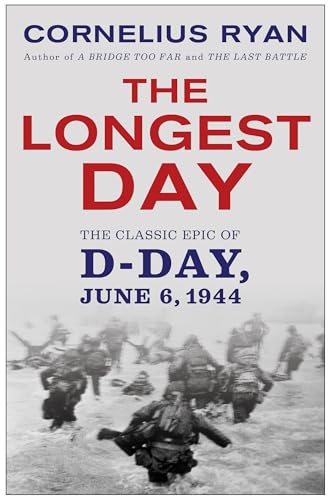
The Longest Day
Cornelius Ryan
The original and still definitive account of June 6. Ryan interviewed more than a thousand survivors — American, British, Canadian, French, and German — and assembled their testimonies into something that reads like a novel and hits like a primary source. Published in 1959, it has never been surpassed.
D-Day: June 6, 1944
Stephen Ambrose
Ambrose's exhaustive account draws on more than 1,400 veteran interviews. Where Ryan captures the day's rhythm, Ambrose captures its granularity — the individual decisions, the small unit actions, the moments where everything hinged on one man doing the right thing.
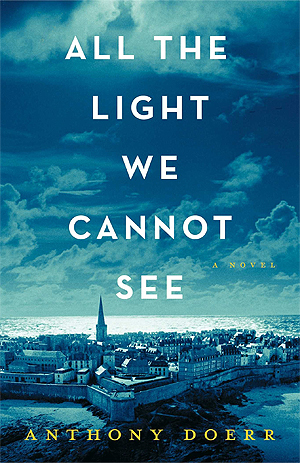
All the Light We Cannot See
Anthony Doerr
Pulitzer Prize-winning fiction set in occupied France and Saint-Malo as the war closes in. A blind French girl and a German soldier whose paths converge as the Allies advance. The finest novel written about what the liberation of France actually meant to the people living inside it.
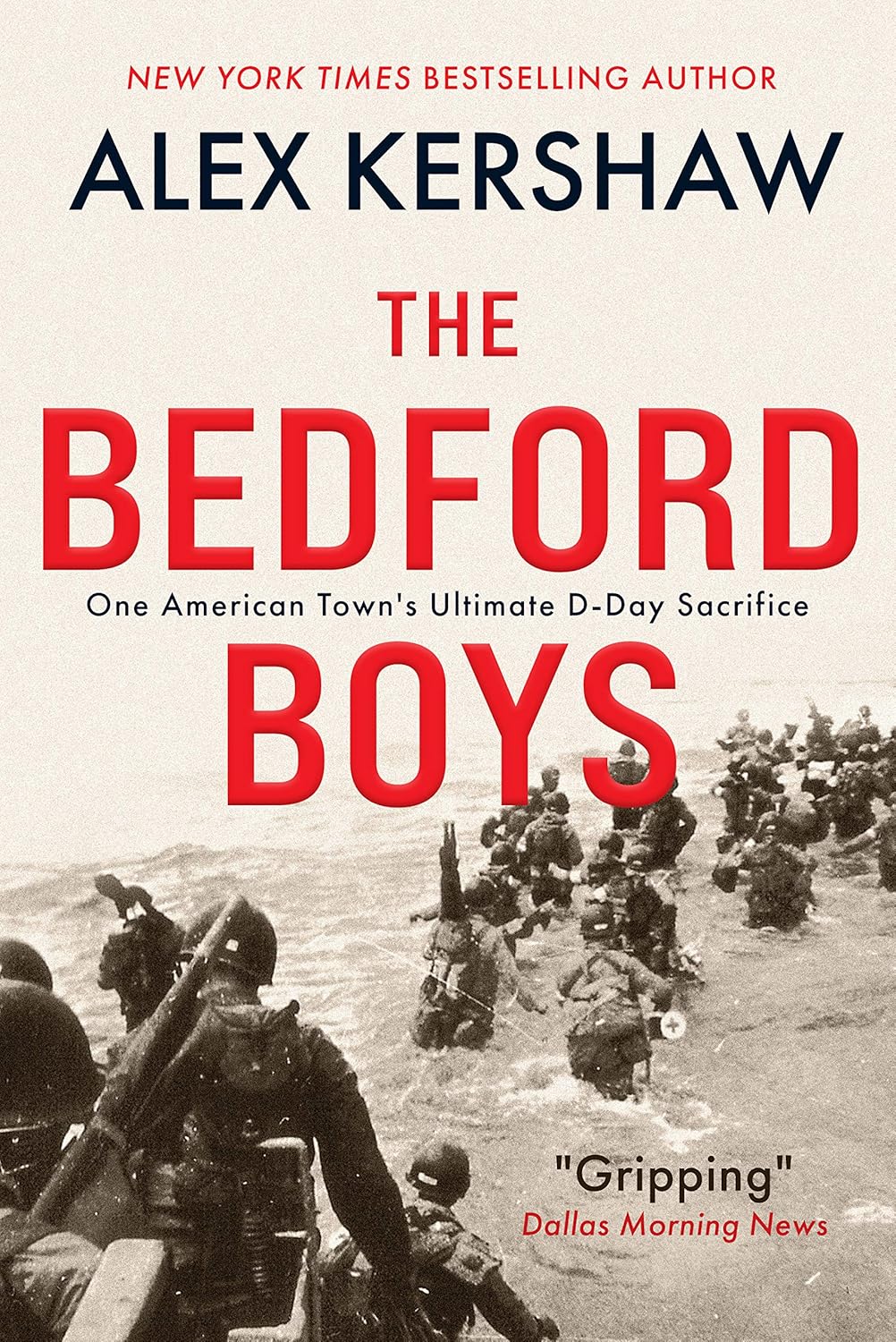
The Bedford Boys
Alex Kershaw
Bedford, Virginia had a population of 3,200 when the war began. Nineteen of its sons died on Omaha Beach on June 6, 1944 — the highest per-capita D-Day loss of any community in America. Kershaw's account of Company A, 116th Infantry is the most human book written about what Normandy actually took.