Operation Eagle Claw
The helicopter crash that built the most lethal special operations force in history
On April 24, 1980, the United States sent its best soldiers into Iran to free 52 hostages and bring them home. Eight men died before a single shot was fired in Tehran. The disaster at Desert One didn't just end a rescue mission — it forced a complete rethinking of how America's special operations forces were organised, trained, and commanded. What rose from that failure was JSOC.
The Hostages
November 4, 1979. Iranian students storm the US Embassy in Tehran, seize 66 Americans, and begin what will become a 444-day ordeal. Fourteen are released within weeks. Fifty-two remain. President Jimmy Carter authorises economic pressure, then diplomatic pressure. Neither works. By the spring of 1980, with the hostages entering their sixth month in captivity, Carter authorises something else entirely.
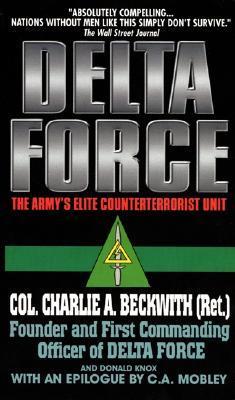
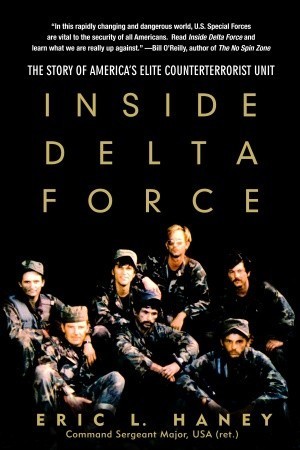
The mission was called Operation Eagle Claw. Its objective was simple to state and extraordinarily difficult to execute: fly Delta Force into Tehran, assault the embassy compound and the Foreign Ministry building, free the hostages, and get them out of Iran alive. The plan required eight helicopters, multiple C-130 refuelling aircraft, a clandestine staging area in the Iranian desert, and the seamless coordination of Army, Navy, Marine Corps, and Air Force assets that had never trained together.
That last part was the problem.
Desert One
The staging area was a remote stretch of desert near Tabas, roughly 600 kilometres southeast of Tehran. American agents had quietly surveyed it weeks earlier, confirmed it was empty, and marked it for the C-130s. The plan called for eight RH-53D Sea Stallion helicopters — mine-sweeping aircraft pressed into service as long-range transports — to fly from the USS Nimitz in the Gulf of Oman, link up with the C-130s at Desert One, refuel, and continue to a second hide site in the mountains near Tehran. Delta would assault the embassy the following night.
The helicopters launched on schedule on the evening of April 24. Almost immediately, things began to unravel.
The Sea Stallions flew into an unexpected haboob — a dense wall of fine suspended dust called a "fesh-fesh" by the crews. Visibility dropped to near zero. Navigation instruments began behaving erratically. One helicopter turned back to the Nimitz after a warning light indicated a cracked rotor blade. A second turned back with an instrument failure. The pilot of the second helicopter would later be criticised for that decision — the instrument in question may have been malfunctioning rather than reflecting a genuine fault — but in the dark, in a dust storm, flying an aircraft type he had limited experience with, he made the call to abort.
Six helicopters reached Desert One. The minimum required to continue the mission was six.
Then, on the ground at Desert One, Helicopter Two was found to have a hydraulic failure. A critical pump had seized. The aircraft could not continue. The operational count dropped to five — below the minimum threshold. Delta Force commander Colonel Charlie Beckwith made the call. Mission abort.
The Fire
What happened next was not enemy action. It was geometry and darkness and the chaos of repositioning aircraft on a patch of unlit desert.
As the force prepared to withdraw, one of the RH-53Ds needed to reposition to allow a C-130 to take off. The helicopter lifted, drifted forward, and its rotor struck the C-130's fuselage. Both aircraft caught fire instantly. The C-130 was loaded with fuel. The explosion was visible for kilometres.
Eight men died. Five Air Force crew on the C-130. Three Marines on the helicopter. Their bodies could not be recovered. The surviving helicopters — still loaded with classified documents, maps, and agent lists — were abandoned on the desert floor and left for the Iranians.
The hostages remained in Tehran. They would not be released for another 259 days, on the day Ronald Reagan was inaugurated.
What the Holloway Commission Found
The post-mission investigation was led by Admiral James Holloway. His commission's findings were blunt. The mission had suffered from a lack of unified command. Delta Force answered to one chain. The helicopter crews — Navy aircraft, Marine pilots — answered to another. The C-130 aircrews answered to a third. There was no single commander with authority over all elements of the task force. When problems arose, decisions had to travel up and across multiple chains before coming back down. In a mission where timing was everything, that structure was nearly lethal before the first helicopter ever launched.
The commission also found that the units had not trained together adequately. The helicopter crews had never flown a full dress rehearsal of the route. Delta Force and the aircrews had never conducted a joint exercise that mirrored the mission profile. Different service cultures, different procedures, different assumptions — all of it exposed the moment the plan met reality.
The helicopter selection was also criticised. The RH-53D was a mine-sweeping aircraft. Its crews were trained for low, slow flight over water — not long-range, high-speed desert infiltration. Better aircraft were available. The choice had been made partly for cover story reasons: the Sea Stallions were plausibly deniable as part of a minesweeping exercise. That logic cost the mission its mechanical margin.
The Creation of JSOC
On October 15, 1980 — six months after Desert One — the Joint Special Operations Command was established at Fort Bragg, North Carolina. Its founding premise was the direct answer to every failure Holloway had documented: a permanent, unified command structure for America's most sensitive special operations units, with a single commander, shared training, and the institutional knowledge to plan and execute missions that no single service branch could manage alone.
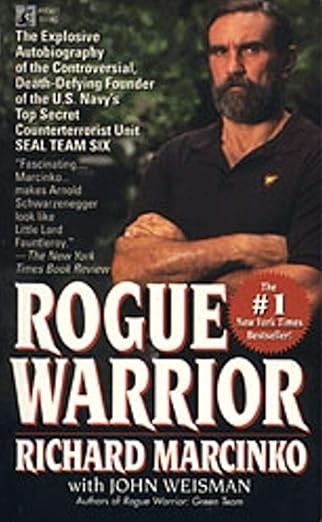
The initial JSOC order of battle included Delta Force and a newly created unit that did not yet exist on April 24, 1980. Richard Marcinko, the Navy's bluntest and most abrasive commander, had been tasked before Eagle Claw with assessing whether the SEALs were ready to contribute to a Tehran rescue mission. His assessment had been devastating: they were not. The Navy's existing SEAL teams were not organised, equipped, or trained for counter-terrorism hostage rescue. Eagle Claw had gone forward without a viable SEAL component.
Marcinko was given six months and a blank cheque to fix that. The result was SEAL Team 6 — the Navy's dedicated counter-terrorism unit, designed from the ground up to operate alongside Delta Force under JSOC command. Where existing SEAL teams trained for underwater demolition and reconnaissance, Team 6 trained for ship seizures, aircraft assaults, and hostage rescue. It was, in Marcinko's own words, built specifically because Eagle Claw had proved that the existing force wasn't good enough.
What JSOC Became
In the years that followed, JSOC expanded beyond its founding units. The 160th Special Operations Aviation Regiment — the Night Stalkers — was created directly from Eagle Claw's helicopter failures, giving JSOC its own dedicated aviation element whose crews trained exclusively for special operations missions in conditions the conventional Army had never contemplated. The Holloway Commission had identified the absence of organic aviation as a structural flaw. The Night Stalkers were the structural fix.
The Goldwater-Nichols Act of 1986 formalized the joint command structure across the entire US military, but JSOC had already been living that model for six years. By the time of Operation Just Cause in Panama, the Gulf War, and then the global counter-terrorism campaigns after September 11, JSOC had become what its founders had envisioned: a unified, joint, continuously training force that moved as a single organism.
The operators who flew into Abbottabad in 2011 and killed Osama bin Laden were JSOC. The forces that dismantled al-Qaeda in Iraq during the surge were JSOC. The capability that allows the United States to place a precision strike team anywhere on earth within hours is built on the institutional foundation that was poured in the wake of eight men dying in an Iranian desert.
The Lesson
Eagle Claw failed for reasons that had nothing to do with courage or training at the individual level. The Delta operators were ready. The aircrews were professional. The intelligence was solid. What failed was the architecture — the assumption that elite units from different services could be assembled, briefly coordinated, and sent into one of the most complex hostage rescue missions ever attempted without the institutional glue of a shared command, shared training, and shared culture.
The eight men who died at Desert One did not die in vain. But the cost of building that lesson into American military structure was higher than it should have been. Every special operations success since — every precision raid, every hostage recovery, every target package executed in darkness — stands on the foundation of what was learned at a burning C-130 in the Iranian desert on the night of April 24, 1980.
READ NEXT — BOOKS ON THIS OPERATION
Affiliate links — as an Amazon Associate we earn from qualifying purchases.