Operation Gothic Serpent
The Battle of Mogadishu — Task Force Ranger, two downed Black Hawks, and eighteen hours in hell
On October 3, 1993, Task Force Ranger launched a daylight raid into Bakara Market in Mogadishu to capture lieutenants of Somali warlord Mohamed Farrah Aidid. Two Black Hawk helicopters were shot down. Eighteen American soldiers died fighting through the night to reach the downed crews and hold the crash sites. The battle became the most intense urban combat American forces had experienced since Vietnam — and produced one of the best military non-fiction books ever written.
By War & Fiction · Editorial standards and corrections
Task Force Ranger
By the summer of 1993, the American military presence in Somalia had shifted from humanitarian to combat. Mohammed Farrah Aidid, the most powerful warlord in Mogadishu, had ambushed and killed twenty-four Pakistani peacekeepers in June, and the UN had put a price on his head. Task Force Ranger — a JSOC composite unit built around Delta Force operators, Rangers from 3rd Battalion/75th Infantry, and 160th SOAR aviation — deployed to Mogadishu in late August with a specific mission: capture Aidid's inner circle and degrade his organisation's command capacity.
The force was good. Delta Force operators were the best direct action soldiers in the world. The Rangers were among the most disciplined and physically capable light infantry in the Army. The Night Stalkers flew the most demanding aviation missions in existence. The problem wasn't the force. The problem was that Task Force Ranger was operating in Mogadishu without the support infrastructure — armoured vehicles, reinforcements on standby, medical assets commensurate with the mission risk — that the commanders had requested and the chain of command above them had declined to provide.
Seven raids in seven weeks had captured key Aidid lieutenants and degraded his network. On October 3, intelligence located two more high-value targets at a building in Bakara Market — the most densely populated and most intensely hostile urban terrain in the city. The raid was planned. The force launched at 3:32 in the afternoon.
The Raid
The assault went in fast and clean. Delta operators fast-roped from helicopters onto the target building, moved through it in minutes, secured both targets, and called for the ground convoy to move the prisoners out. The convoy was already rolling. Fifteen vehicles, Rangers and Delta, moving through streets that were narrowing and filling with Somali militia as every armed man in Bakara Market began converging on the sound of the helicopters.
Then Super Six One went down.
Chief Warrant Officer Cliff Wolcott's Black Hawk was hit by an RPG at approximately 4:20 PM, one block from the target building. It spun and crashed in a narrow alley in the densest part of the market. The crash was survivable. Two Delta snipers — Gary Gordon and Randy Shughart — volunteered to be inserted at the crash site to protect survivors until the ground convoy could reach them. They were inserted. They fought for approximately an hour against hundreds of Somali militia. Both were killed. Wolcott and most of his crew did not survive. Pilot Michael Durant was captured. Gordon and Shughart were awarded the Medal of Honor posthumously — the first Medals of Honor since Vietnam.
Eighteen minutes later, a second Black Hawk — Super Six Four, piloted by Chief Warrant Officer Mike Durant — was also hit by an RPG and went down, this time further from the target building. Durant survived with severe injuries. He was captured by the militia.
The Night
The ground convoy trying to reach the first crash site was hit by fire at every intersection. Vehicles were disabled. Men were wounded. The drivers and Rangers and Delta operators fighting from the vehicles couldn't navigate streets they'd never seen in a city where every building looked the same and every alley could conceal a machine gun. The convoy got lost. It reached a defensive position at the Pakistani stadium and requested reinforcement.
The men at the first crash site — roughly a hundred American soldiers in a three-block radius — held through the night. They treated their wounded with what they had. They maintained a perimeter against militia attacks that came in waves. Delta operators, Rangers, and aircrew who couldn't fly their damaged aircraft fought as infantry from rooftops and doorways. Staff Sergeant Matt Eversmann, who'd commanded a chalked of Rangers that fast-roped into the fight and found himself cut off from the rest of the force, organised his men with a composure that Bowden's book captures better than any official account.
The relief column — a joint force of Americans, Malaysians, and Pakistanis in APCs and tanks — didn't reach the first crash site until approximately 1:55 AM. The battle had lasted almost eighteen hours.
The Aftermath
Eighteen Americans were killed. Seventy-three were wounded. Michael Durant was held for eleven days before being released. The bodies of some of the dead were dragged through the streets of Mogadishu. The images were broadcast globally and reached the American public within hours.
President Clinton withdrew American forces from Somalia within six months. The withdrawal had consequences that extended far beyond Somalia. In Khartoum, Sudan, a senior al-Qaeda figure named Osama bin Laden watched the American response to Mogadishu and drew conclusions about American will that would inform his strategic thinking for the next eight years. The 1993 withdrawal is cited explicitly in his subsequent statements. Mogadishu was not the cause of the September 11 attacks. But it was a data point in the analysis of an enemy who was paying close attention.
What Bowden Got Right
Mark Bowden spent years on Black Hawk Down. He interviewed the survivors, the Somali militia fighters, the bystanders, and the commanders. He used the after-action recordings from the helicopter surveillance footage and the radio transcripts. What he produced is not a polemic about policy decisions or a celebration of American military capability. It is a granular account of what individual soldiers experience when a mission goes catastrophically wrong and they have to find a way to survive it.
The soldiers in Bowden's account are fully human — afraid, competent, occasionally confused, often heroic in ways they'd never describe as heroic. The Somali fighters are rendered as people with motivations, not abstractions. The book is a serious work of journalism that happens to read at the pace of an action sequence because the events it's describing had that pace. It's one of the few pieces of military writing that serves simultaneously as an operational account, a character study, and a structural critique of how the mission came to require what it required.
The Institutional Response
Mogadishu accelerated the evolution of JSOC in ways that Eagle Claw and Son Tay had begun. The absence of organic armoured support, the communication gaps between elements of the task force, the intelligence fusion problems — all of it became input for the next generation of special operations planning. The Night Stalkers revised their rescue protocols. Delta's direct action methodology was stress-tested against the hardest possible urban terrain and adapted accordingly. The Rangers trained differently.
The men who fought in Mogadishu became, in many cases, the senior NCOs and officers who built JSOC into the force that dismantled al-Qaeda in Iraq in 2006 and 2007 — the force that hit Abbottabad in 2011. The institutional learning that followed Mogadishu was real, even if it came at a cost that no institutional learning ever justifies.
READ NEXT — BOOKS ON THIS OPERATION
Amazon and Audible links are provided for convenience; we do not earn commissions from these purchases.
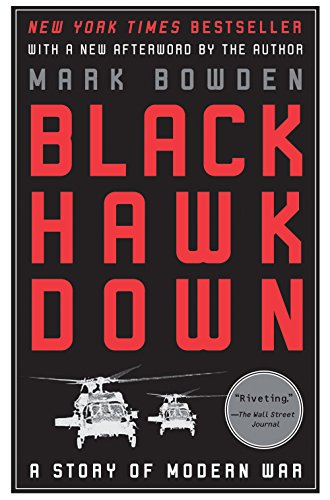
Black Hawk Down
Mark Bowden
Bowden's reconstruction of the battle is the gold standard for military narrative journalism. He interviewed over 100 survivors — American and Somali — and produced an account that reads faster than fiction and is more accurate than most official histories.
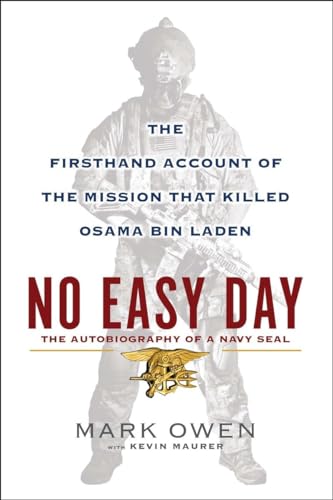
No Easy Day
Mark Owen (Matt Bissonnette)
Owen's memoir begins his career in special operations — the culture, the training pipeline, and the institutional ethos that Mogadishu both tested and ultimately forged into the JSOC force of the 2000s.
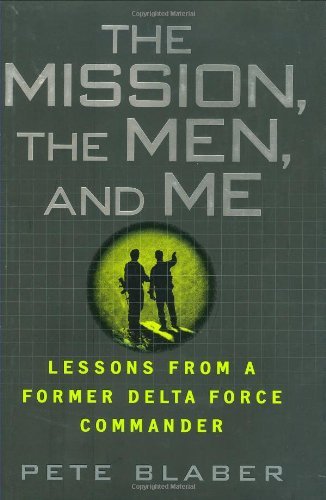
The Mission, The Men, and Me
Pete Blaber
Blaber's leadership framework was built on the lessons of Mogadishu's failures and Delta's subsequent evolution — the book is partly a post-mortem on what happens when the mission outgrows the command architecture around it.
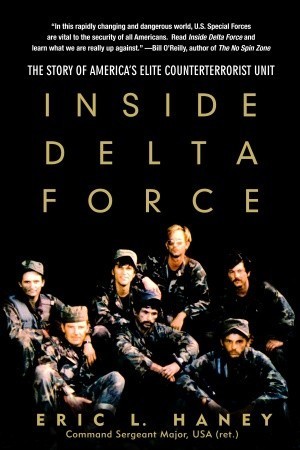
Inside Delta Force
Eric L. Haney
Haney gives the cultural context for Delta Force's role in Mogadishu — the unit's approach to direct action, the relationship with the Rangers, and the institutional weight of what went wrong.