Private Military Contractors and Iran
What's actually known — and the books that explain how contractors really operate
Private military contractors have operated in every major U.S. conflict since the 1990s — performing security, logistics, training, and occasionally direct combat support roles that blur the traditional line between military and civilian operations. With Iran tensions rising, questions about contractor involvement are inevitable. The books that actually explain this world are more accurate than any headline.
By War & Fiction · Editorial standards and corrections
What Contractors Actually Do
The term "private military contractor" covers an enormous range of activities, most of which bear little resemblance to the mercenary image that dominates popular coverage. The majority of contractor personnel in conflict zones are performing logistics, base support, equipment maintenance, and training functions that the military has progressively outsourced since the 1990s. In Iraq at the height of the surge, there were more contractors than uniformed soldiers in-country. Most of them were there to keep trucks running, bases supplied, and local security forces trained — not to conduct combat operations.
The smaller category of armed security contractors — the Blackwater model — performed personal protection, convoy security, and facility guarding. These personnel were typically drawn from special operations backgrounds, armed, and operating in environments where contact with hostile forces was a genuine possibility. The legal status of their actions in those environments remains contested, as the convictions and subsequent pardons of Blackwater contractors in the Nisour Square massacre demonstrated.
The Iran Question
No confirmed reporting, as of the available record, places U.S. contractors inside Iran in an operational capacity. The Iranian government's domestic control and the nature of the Iranian threat environment make the kind of contractor presence that existed in Iraq or Afghanistan essentially impossible in the same form. The question of whether contractors might be used for specific, limited operations — equipment maintenance, advisory support to opposition groups, intelligence-adjacent activities — is a different question, and the answer is that this kind of low-visibility contractor activity is precisely what the public record rarely captures until long after the fact.
The historical precedent that's most relevant is the contractor activity in support of the Contras in Central America during the 1980s, which came to light through the Iran-Contra investigation. The contractors involved there were former military and intelligence personnel operating outside the formal command structure, doing things that the U.S. government wanted done but could not officially authorize. The lesson of that history is not that contractors are always involved in sensitive operations — it's that when they are, the public doesn't find out in real time.
What the Books Explain
Jeremy Scahill's Blackwater remains the essential account of how the modern PMC industry was built and what it became. Robert Pelton's Licensed to Kill is the ground-level view — what contractors actually do day to day, how the money works, and how the industry attracts the particular personality type that wants to operate in conflict zones without the constraints of the chain of command. Both books are more accurate than any headline about contractors and Iran, because they explain the actual operating model rather than projecting it onto a specific scenario.
The more important point is that the contractor world is an extension of the special operations culture, not an alternative to it. The people who populate it came from Delta Force, SEAL Team 6, the Rangers, and the Special Forces groups. They bring the same training, the same operational culture, and often the same relationships with their former units. Understanding the contractor world means understanding the special operations world first — which is what this site is built to help with.
READ NEXT — BOOKS ON THIS OPERATION
Amazon and Audible links are provided for convenience; we do not earn commissions from these purchases.

Blackwater
Jeremy Scahill
The rise of Blackwater from Erik Prince's security startup to the most powerful private military company in American history — told through its Iraq operations and the political relationships that sustained it.
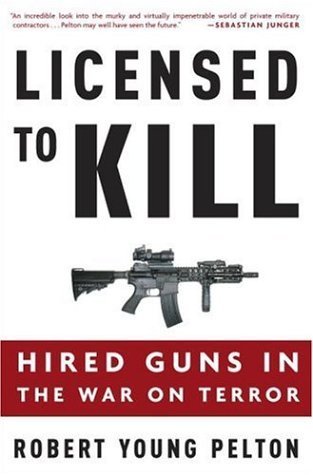
Licensed to Kill
Robert Young Pelton
Pelton embedded with private contractors across multiple conflict zones — the most honest and granular account of what contractors actually do, how they're recruited, and how the industry really works.
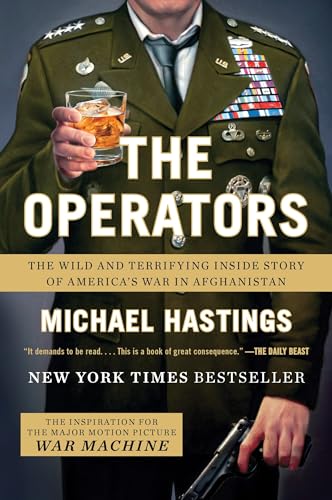
The Operators
Michael Hastings
Hastings' account of modern war leadership and the culture of the special operations and advisory world — essential context for understanding the relationship between uniformed forces and the contractor ecosystem that supports them.