The Son Tay Raid
The most technically perfect special operations mission in American history — that rescued nobody
On November 21, 1970, a 56-man assault force flew deep into North Vietnam to rescue American prisoners of war held at Son Tay prison camp. They executed the mission with near-flawless precision. The camp was empty. The prisoners had been moved four months earlier. The raid rescued no one — and permanently changed how America trains, equips, and commands special operations forces.
By War & Fiction · Editorial standards and corrections
The Prison at Son Tay
Son Tay was a walled compound twenty-three miles west of Hanoi, in a bend of the Song Con River. By mid-1970 it held between fifty and sixty American prisoners of war — airmen and soldiers, most of them downed aviators, held in the kind of conditions that the North Vietnamese government officially denied and that returning prisoners would later describe in testimony that shocked the American public.
The intelligence came from reconnaissance photographs. SR-71 overflights had been building a picture of Son Tay's layout since 1969. The camp was clearly a prison — the compounds, the guard towers, the constrained movement of the people inside. What the photographs couldn't confirm with certainty was the prisoner count, their condition, or whether they were still there.
In August 1970, Brigadier General Donald Blackburn — Special Assistant for Counterinsurgency and Special Activities — received authorisation to plan a rescue mission. He brought in Brigadier General Leroy Manor to command it, with Colonel Arthur "Bull" Simons leading the assault force. Simons was one of the most experienced special operations soldiers in the American Army, a veteran of World War II, Korea, and years of unconventional warfare in Southeast Asia. If anyone could plan and execute a raid into the heart of North Vietnam, it was Bull Simons.
The Planning
The planning was meticulous to a degree that hadn't been seen in American special operations. The assault force trained for over two months at Eglin Air Force Base in Florida, using a full-scale mockup of Son Tay compound built from the reconnaissance photographs. They flew the same approach routes at the same times of night. They rehearsed the assault sequence until every man knew every other man's job. They planned for casualties, for prisoners who couldn't walk, for aircraft that would abort, for the guard response time based on the number of troops North Vietnam was estimated to have within reaction distance.
The key insight driving the planning was that Son Tay required two things simultaneously: surprise and speed. The assault force had to hit the compound before the guards could execute prisoners — a standing fear given North Vietnamese policy — and had to extract before the vastly larger North Vietnamese military could bring forces to bear. The planning estimated twenty-six minutes on the ground. In practice, they'd execute in about thirty.
The helicopter assault plan divided the force into three elements. Blueboy was the direct assault team that would crash-land a helicopter inside the compound wall — the most dangerous insertion method, chosen because it guaranteed immediate, complete surprise. Greenleaf would eliminate the guard force and secure the outer perimeter. Redwine would provide the command element and backup. Five HH-53 helicopters and one HH-3, flying with a formation of A-1 Skyraiders and F-105s for air support, would carry the raid force from Udorn Royal Thai Air Force Base to Son Tay and back.
The Wrong Compound
On the night of November 21, 1970, the force launched as planned. The night navigation was precise. The approach was undetected. The air defence suppression worked. And then Captain Richard Meadows — commanding Blueboy from inside the HH-3 as it crashed through the Son Tay compound wall — realised something was wrong.
The compound was empty. No prisoners. No signs of recent habitation by Americans.
One other thing went wrong first, and it matters for what came after. One of the helicopters — carrying part of the assault force — landed at the wrong compound. Not Son Tay. A facility about 400 metres south called "Secondary School," which intelligence had noted but not fully characterised. The helicopter landed there, the assault team engaged what turned out to be a large force of foreign military advisers — Soviet or Chinese, accounts differ — and killed them. Then they were extracted, returned to Son Tay, and the force consolidated.
But the prisoners weren't there. US intelligence later determined they had been moved to a camp called Dong Hoi in July 1970, four months before the raid, due to flooding in the Son Tay area. The move had been detected in some form — there had been signals — but the intelligence picture had not been fully updated before the mission launched. Fifty-six men flew deep into North Vietnam, executed a near-perfect assault, and brought home nothing except the knowledge that they'd done everything right.
What the Raid Achieved
The immediate military result was zero prisoners rescued. The political fallout was significant — public exposure of how badly American POWs were being treated generated enormous domestic pressure on Hanoi, and there is credible evidence that treatment of American prisoners improved substantially after the raid. The North Vietnamese consolidated remaining POWs into the Hanoi Hilton and similar large facilities, partly to make another raid more difficult. Consolidation had the unintended consequence of improving prisoner morale — men who had been held in isolation for years were suddenly housed with dozens of fellow Americans, and the resistance structure that sustained them through the rest of the war became much more effective.
More significantly, Son Tay exposed something the Eagle Claw disaster would confirm ten years later: the American military had no permanent, dedicated special operations force capable of planning and executing complex direct action missions of this kind. The raid had been assembled from scratch, trained in isolation, and executed by men who were extraordinary as individuals but who had never operated as a coherent unit before. The intelligence process that failed to catch the prisoner transfer was not connected to the operational planning in any systematic way. There was no institutional home for this kind of mission.
The Institutional Legacy
Colonel Charlie Beckwith had been arguing since the mid-1960s that the United States needed a force modelled on the British SAS — a permanently constituted, continuously training special operations unit dedicated to direct action, counter-terrorism, and hostage rescue. He had made the argument before Son Tay. Son Tay gave the argument a specific, documented failure to point to.
Beckwith would spend most of the 1970s fighting the Army bureaucracy for the resources and authorisation to build what he envisioned. He got it in 1977, when 1st Special Forces Operational Detachment-Delta was formally constituted at Fort Bragg. The founding premise of Delta Force was explicitly the lessons of Son Tay and, before it, a decade of watching British SAS operators demonstrate what a permanent, dedicated unit could do that an assembled task force never could.
Bull Simons didn't stop at Son Tay either. In 1979, three months before he died, he led a private rescue mission into Iran to free two employees of Ross Perot's Electronic Data Systems company who had been imprisoned by the revolutionary government. Simons assembled a team of EDS employees with military backgrounds, flew into Tehran, and walked his people out of Qasr Prison during a prison riot. No government involvement. No intelligence support. Just Bull Simons doing what Bull Simons did. The story is told in Ken Follett's On Wings of Eagles — a book that reads like fiction and isn't.
The Men Who Were There
Richard Meadows — who commanded Blueboy and was first through the Son Tay wall — went on to become one of the foundational figures of Delta Force. He was one of Beckwith's most trusted officers during the unit's early years. Dick Meadows was at Desert One in 1980 as a civilian contractor, having retired from the Army, serving as a ground agent in Tehran to support Eagle Claw's final phase. He evacuated under cover when the mission aborted. He died in 1995. Fort Meadows at Fort Bragg is named for him.
Bull Simons died in May 1979, weeks after the Tehran rescue. He was sixty years old. His family later said he'd been sick during the EDS mission but hadn't mentioned it. He is buried at Arlington.
The prisoners at Son Tay — the men the raid was built to rescue — survived the war and came home in 1973. Several of them attended reunions with the Son Tay raiders in later years. They expressed gratitude not for a rescue that never happened but for the knowledge that someone had tried. That the country had sent its best men into the dark to bring them home. That counted for something, even when the camp was empty.
The Lesson
Son Tay is studied in every special operations professional development course in the American military because it demonstrates simultaneously how high special operations can reach and how badly institutional failures — in intelligence fusion, in command integration, in the absence of a permanent dedicated force — can degrade even perfect tactical execution. The men who flew to Son Tay did everything right. The system around them failed.
The answer was Delta Force. The answer was JSOC. The answer was permanent, dedicated units with their own organic intelligence, their own aviation, their own command structure, and years of training together before they ever get on the aircraft. Son Tay didn't start that transformation. But it accelerated it — and the men who built Delta Force cited it explicitly when making their case for why the Army needed something it had never been willing to build before.
READ NEXT — BOOKS ON THIS OPERATION
Amazon and Audible links are provided for convenience; we do not earn commissions from these purchases.
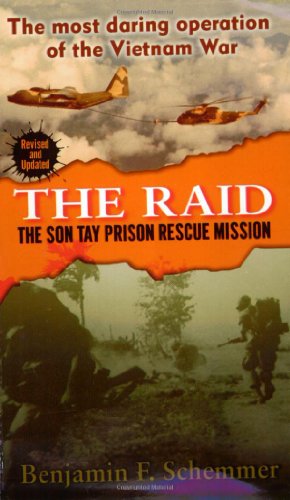
The Raid
Benjamin F. Schemmer
The definitive account of Son Tay — Schemmer had access to the planners, the raiders, and the intelligence files. Still the essential book on the operation four decades later.
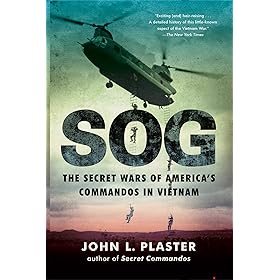
SOG
John L. Plaster
Plaster's account of MACV-SOG gives essential context for the intelligence network that fed the Son Tay target package — and why POW intelligence was so difficult to confirm.
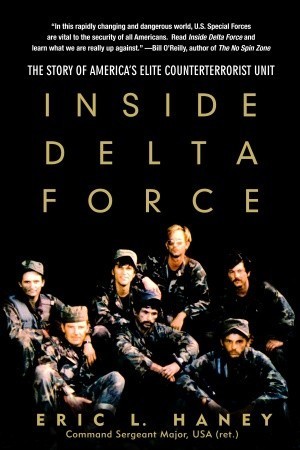
Inside Delta Force
Eric L. Haney
Haney's memoir traces Delta Force's founding directly to the institutional failures Son Tay exposed — the raid's legacy runs through every page of Delta's early history.
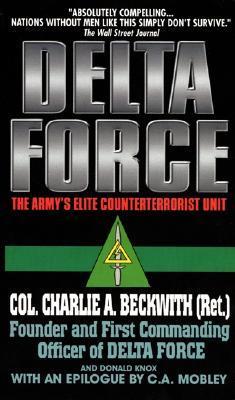
Delta Force
Charles 'Charlie' Beckwith
Beckwith explicitly cites Son Tay when making the case for Delta Force — a permanent, dedicated hostage rescue unit was the direct institutional answer to what went wrong.