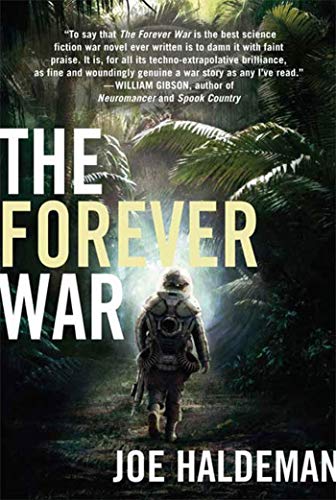
The Forever War
How Joe Haldeman's Vietnam trauma became the most important military sci-fi novel ever written
Joe Haldeman came back from Vietnam as a combat engineer with shrapnel wounds and a Purple Heart and wrote a science fiction novel about soldiers who return from interstellar war to find their world unrecognizable. The Forever War won the Hugo, the Nebula, and the Locus Award in 1975 and 1976. It changed what military science fiction was allowed to say about war, about institutions, about the relationship between soldiers and the governments that deploy them. Fifty years later it remains the genre's most honest novel.
Joe Haldeman was drafted in 1967, served as a combat engineer in Vietnam, was wounded by shrapnel while clearing a trail in the central highlands, and came home in 1969 with a Purple Heart and views about the military, the government, and the war that were difficult to express directly. He expressed them as science fiction instead. The Forever War was published in 1974, serialized in Analog Science Fiction magazine, and it won every major award the genre had. It remains the most important military science fiction novel ever written — not because it's the most technically sophisticated or the most entertaining, though it is both, but because it told the truth that the genre had been avoiding since Heinlein established the template in 1959.
The Story
William Mandella is drafted into Earth's interstellar military to fight the Taurans — an alien species humanity has been at war with since a first contact incident that neither side fully understands. The physics are Einsteinian: ships travel at relativistic speeds, and time dilation means that while Mandella experiences months of combat deployment, years or decades pass on Earth. He returns from his first tour to find Earth changed. He returns from his second to find it unrecognizable. The war continues, its purpose increasingly obscure, its costs compounding across centuries of subjective time that Mandella experiences as a career.
Mandella and his unit fight the Taurans with future weapons in vacuum conditions, in powered armor, on worlds with atmospheres that kill unprotected humans in seconds. The combat is technically detailed in the way that comes from someone who has been in combat and understands what it actually requires: physical endurance, coordination under fire, the gap between what training prepares you for and what contact actually produces. Haldeman's military is convincing because it's written from the inside. The bureaucracy, the arbitrary regulations, the distance between command's understanding of the tactical situation and the operators who execute in it — these feel authentic because they are.
What It's Actually About
The forever war of the title is Vietnam, refracted through physics. The relativity mechanic lets Haldeman do something that straight Vietnam fiction struggled to do: show the cumulative alienation of the returning soldier not as a personal failure of adjustment but as a structural consequence of how the war works. Mandella doesn't return to an unchanged home and fail to fit back in. He returns to a home that has genuinely, objectively moved on — new language, new social structures, new values that make his own obsolete. The failure to fit in isn't his. The distance is real. The war took him out of his time and he can't go back.
This is the Vietnam experience as veterans described it, rendered in a form that made the underlying mechanism visible. The war asked young men to leave their world, participate in violence whose purpose they often couldn't understand, and return to a country that had been having entirely different arguments in their absence. The Forever War's physics just made explicit what the temporal reality of military service had already produced.
The Taurans are not evil. The war is not necessary. The book reveals, near its end, that the entire conflict was based on a miscommunication — a first-contact failure that sent two civilizations into centuries of war. By the time this is discovered, the casualties on both sides are incomprehensible. The waste is the point. The Forever War is about what happens when institutions pursue wars whose original justification has been forgotten, whose continuation is driven by its own momentum, and whose ending requires someone to be the first to stop.
The Heinlein Argument
Robert Heinlein's Starship Troopers (1959) was the dominant model for military science fiction when Haldeman enlisted. Rico, Heinlein's protagonist, is transformed by military service into a responsible citizen — the military as civilizing institution, the soldier as the highest expression of civic virtue. The Mobile Infantry is hard but honorable. The state that sends Rico to fight the Bugs deserves the loyalty it receives. Heinlein's book is a genuine argument, not propaganda: he believed these things, they're the product of serious thought about civil society and obligation, and the best way to read Starship Troopers is as a sincere philosophical position that many people found persuasive.
Haldeman read it. He also fought in Vietnam. The Forever War is his reply.
In Haldeman's military, service does not civilize. It alienates. The state that deploys Mandella does not deserve loyalty — it has sent him to fight a war based on a misunderstanding, is incapable of explaining its objectives clearly, and will grind through centuries of conflict without the institutional capacity to recognize its own error. The military is not a meritocracy where competence rises; it is a bureaucracy where the relationship between individual performance and institutional outcomes is tenuous at best. Mandella survives because he is competent and lucky. The system neither rewards his competence nor acknowledges his luck. It just keeps sending him out.
This is not nihilism. Haldeman is not saying service is meaningless — Mandella is genuinely skilled and his skill saves his people. He is saying that the meaning service makes has to be found at the unit level, in the relationships between soldiers, rather than in the relationship between soldiers and the institutions that deploy them. The friendship between Mandella and Marygay, the unit cohesion that keeps people alive in contact, the dark humor that makes the impossibility survivable — these are where The Forever War finds its affirmation. Not in the war's purpose, which is fraudulent. In the people fighting it, who are real.
The Legacy
Every significant military science fiction novel written after 1974 is in conversation with The Forever War, whether explicitly or not. Old Man's War (2005) is in the most explicit conversation — Scalzi acknowledges Haldeman as an influence and builds a universe that tries to hold both the Heinleinian optimism and the Haldemanian critique simultaneously. The Old Man's War Colonial Defense Forces are simultaneously the honorable institution Heinlein would recognize and the morally compromised bureaucracy Haldeman would expect, and the tension between those two things drives the series.
Galaxy's Edge, the contemporary military sci-fi universe by Anspach and Cole, sits closer to the Heinlein end of the spectrum: the Legion is a genuine institution with genuine values, the operators who serve it are professionals in the best sense, and the problems are institutional failures that can theoretically be corrected rather than structural contradictions that cannot. This is a choice, not an oversight — Anspach and Cole write military fiction for readers who find meaning in the professional ethos of military service, and The Forever War's deep skepticism of institutions is not their register.
The Forever War remains in print, remains on reading lists, and remains the book that military science fiction readers eventually arrive at regardless of where they started. It's the genre's honest reckoning with itself — the acknowledgment that the Heinleinian template was built on assumptions that Vietnam had tested and found wanting. You don't have to agree with Haldeman's conclusions to benefit from reading it. You just have to be willing to sit with the question he poses: what if the war, and the institution that fights it, and the government that orders it, are not worthy of the men who die in them? The Forever War doesn't resolve that question. It just refuses to pretend it doesn't exist.
READ NEXT — BOOKS ON THIS OPERATION
Affiliate links — as an Amazon Associate we earn from qualifying purchases.
Forever Free
Joe Haldeman
The 1999 direct sequel. Mandella and Marygay attempt to escape the post-war utopia they find themselves in. Divisive among fans — the ending is genuinely strange — but essential for readers who want the full arc of Haldeman's thinking about the war and what comes after.
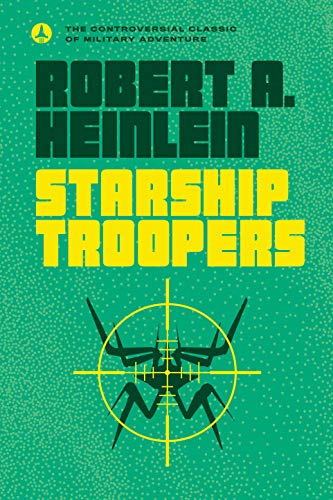
Starship Troopers
Robert A. Heinlein
The book The Forever War is arguing with. Heinlein's 1959 novel presents military service as citizenship's highest expression and the military as an honorable institution. Haldeman read it in Vietnam and came back with different conclusions. Reading both together is essential for understanding what the genre was doing.
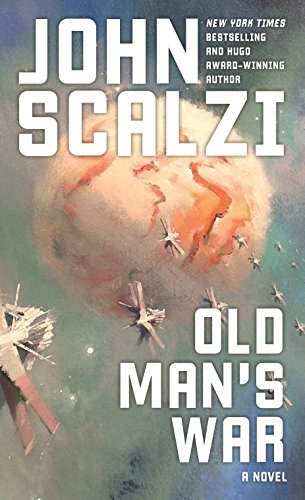
Old Man's War
John Scalzi
Scalzi's 2005 novel is in explicit conversation with both Heinlein and Haldeman — it acknowledges the Heinleinian idealism while building in the Haldemanian critique. The most readable contemporary entry point into the three-way argument that defines the genre.