The A Shau Valley
LRRPs, Screaming Eagles, and the NVA's back door to the coast
The A Shau Valley was a 25-mile long NVA logistics corridor running from Laos to the coast — a superhighway for troops and supplies. American LRRP teams probed it constantly, and the 101st Airborne fought some of the war's bloodiest battles there, including Hamburger Hill.
By War & Fiction · Editorial standards and corrections
The A Shau Valley was twenty-five miles long and two miles wide, running north-to-south along the Laotian border in I Corps — South Vietnam's northernmost military region. At its northern end it opened toward Hue, the ancient imperial capital and one of the most strategically significant cities in the country. The NVA understood this geography before the Americans did. They used the A Shau as the primary corridor for infiltrating troops and supplies from Laos toward the coast, and they defended it accordingly. By 1966, when the last American Special Forces camp in the valley was overrun, the A Shau had become NVA territory — a logistics highway that American forces could enter only at enormous cost.
The 1st Cavalry Division (Airmobile) and the 101st Airborne Division (Airmobile) launched repeated air assault operations into the valley throughout 1968 and 1969, attempting to disrupt the NVA supply infrastructure. Each operation found roads, storage sites, and weapons caches that confirmed the valley's importance. Each operation also found that the NVA had positioned anti-aircraft weapons specifically to contest the helicopter operations that made American airmobile tactics work. The A Shau was one of the most anti-aircraft-dense environments American aviators encountered in Vietnam.
LRRP Operations
Before the 101st and 1st Cav committed brigade-sized forces to the valley, Long Range Reconnaissance Patrol teams had been probing it for years. F Company, 58th Infantry (LRP), attached to the 101st Airborne, ran teams into the A Shau on missions that the airmobile commanders used to build their intelligence picture before committing larger forces. These were six-man patrols inserted by helicopter, tasked to observe and report, avoiding contact if possible and surviving contact when avoidance failed.
Gary Linderer served with F/58th Infantry (LRP) and his accounts — Eyes of the Eagle (his personal memoir) and Six Silent Men Book 2 (the unit history he co-wrote) — provide the most detailed first-person record of A Shau LRRP operations available. Linderer writes about specific missions: the insertion procedures designed to minimize enemy observation, the navigation challenges in terrain where the map and the ground often disagreed, the immediate action drills that determined whether a compromised patrol survived the first contact, and the extraction procedures that were the most dangerous part of every operation.
Hamburger Hill
The battle for Dong Ap Bia — Hill 937 — in May 1969 became one of the most controversial engagements of the war. The 101st Airborne's 3rd Battalion, 187th Infantry attacked the hill eleven times over ten days before taking it, suffering 72 killed and 372 wounded. The NVA defending force was estimated at battalion strength, well-dug-in on terrain that channeled American assaults into kill zones. The hill had no particular strategic value beyond the NVA's use of it as a base of operations in the valley. American forces took it, held it for a month, and abandoned it.
The press christened it Hamburger Hill and the name stuck. The battle crystallized the strategic incoherence that plagued American operations in the A Shau: the valley was important, the NVA would defend it, and the American military would take it at high cost and then leave, allowing the NVA to reoccupy it and begin the cycle again. Hamburger Hill became a symbol of what critics identified as the fundamental problem with the attrition strategy — winning individual engagements while losing the broader campaign.
What the LRRP Teams Knew
The LRRP teams operating in the A Shau before Hamburger Hill had been reporting what the intelligence assessments eventually confirmed: the valley was an NVA logistics hub of major importance, defended in depth, with anti-aircraft weapons positioned to contest American aviation assets. The LRRPs' ability to confirm the presence of specific road networks, storage sites, and troop concentrations shaped how the 101st Airborne planned its assault operations.
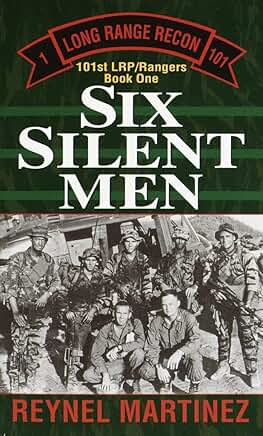
Reynel Martinez's Six Silent Men Book 1 covers the earlier period of 101st LRP operations, establishing the context for the 1969 operations Linderer describes. The two volumes together trace how the LRRP program evolved in I Corps from improvised patrols into a professional long-range reconnaissance capability — the institutional development that made the intelligence picture on which Hamburger Hill was planned even possible.
The A Shau Valley operations remain among the most studied of the Vietnam War because they illustrate so cleanly the tension between tactical competence and strategic purpose. The LRRP teams that gathered intelligence in the valley, and the airmobile units that acted on it, were professionally excellent. The strategy they were executing was, by most assessments, fatally flawed. That combination — extraordinary individual and unit performance in service of a strategy that wasn't working — is what makes the A Shau Valley essential for understanding what the war actually was.
READ NEXT — BOOKS ON THIS OPERATION
Amazon and Audible links are provided for convenience; we do not earn commissions from these purchases.
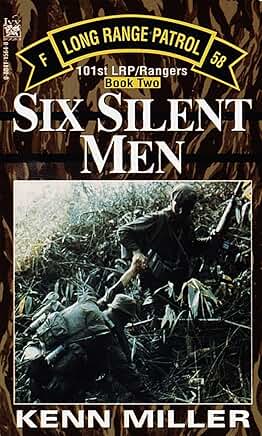
Six Silent Men: Book 2
Gary A. Linderer
Linderer's LRRPs operated extensively in the A Shau — direct first-person account.
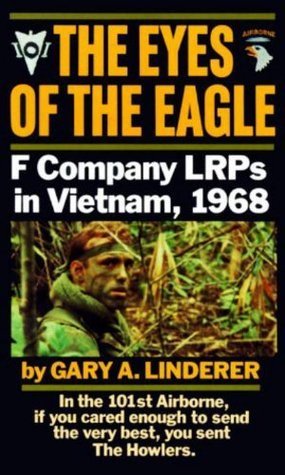
Eyes of the Eagle
Gary A. Linderer
Linderer's personal memoir — A Shau operations feature prominently.