The Trail — Laos and Cambodia
SOG's war against the Ho Chi Minh Trail in denied territory
The Ho Chi Minh Trail ran through Laos and Cambodia — officially 'neutral' countries where American forces were forbidden to operate. SOG was the exception. Recon Teams crossed the fence daily, mapping trail networks, calling in Arc Light strikes, and fighting running gun battles they couldn't tell anyone about.
By War & Fiction · Editorial standards and corrections
The Ho Chi Minh Trail was not a trail. It was a network: hundreds of miles of roads, paths, waterways, and bicycle routes threading through the jungle of Laos and Cambodia, connecting North Vietnam to the battlefields of the South. American strategic planners understood that interdicting this network was essential to cutting off NVA Main Force units from their supply lines. American political constraints — Laos and Cambodia were nominally neutral — meant that no conventional forces could operate there. MACV-SOG was the answer to a problem that official policy said didn't exist.
The operations running into Laos fell under Command and Control Central (CCC) at Kontum. Operations into Cambodia were handled by Command and Control South (CCS) at Ban Me Thuot. The missions were the same as the DMZ corridor: road-watch, prisoner snatch, sensor implantation, and direct action against high-value targets. The terrain was different — denser jungle, more complex river systems, deeper penetrations from the South Vietnamese border — and the consequences of compromise were the same: the NVA treated captured SOG personnel as intelligence assets to be exploited, not prisoners to be exchanged.
The Trail in Operational Reality
What American aerial photography and signals intelligence showed of the Trail was always incomplete. The jungle canopy concealed road construction, vehicle movement, and supply caches from overhead observation. MACV-SOG Recon Teams provided the ground truth that no sensor array could replicate: teams that walked the trail sections could see what was actually moving, how it was organized, and what the NVA's countermeasures looked like from the inside.
The Trail was more sophisticated than most American accounts acknowledged at the time. The NVA maintained dedicated road-repair units that operated around the clock after bombing strikes. Supply caches were distributed and hardened. Anti-aircraft units were positioned to engage American aircraft before they could identify and strike convoys. The NVA understood they were fighting a logistics war, and they were very good at it. Halting the flow of material down the Trail required sustained pressure — constant reconnaissance, constant strike packages, constant harassment — not a single decisive blow.
The Most Dangerous Missions in the War
Running Recon Teams into Laos carried casualty rates that would have been considered catastrophic in conventional warfare. Teams were inserted by helicopter into landing zones sometimes surrounded by NVA troop concentrations. Communications with extraction forces were intermittent. The air assets available for extraction under fire were finite and often committed to multiple teams simultaneously. When a team was compromised — when the NVA's tracker units found them and forced contact — the survival calculus depended on how quickly helicopter gunships and extraction assets could reach them, and whether the team could maintain cohesion long enough to reach an extractable position.
John Plaster's follow-up volume, Secret Commandos, covers the Laotian operations in the depth that SOG gave to the DMZ corridor. Plaster served in both environments and writes about the difference with the authority of someone who ran the missions. The Laotian operations were longer, deeper, and more dependent on air support, which meant they were more vulnerable to the weather cycles that grounded aviation and stranded teams. Teams that expected a two-day mission sometimes spent five days in Laos waiting for weather to clear and extraction to become possible.
Nick Brokhausen's Account
Nick Brokhausen's We Few and Whispers in the Tall Grass are the most recently published SOG memoirs, and they cover the Laotian AO in detail that older accounts sometimes soften. Brokhausen writes about the specific psychology of running cross-border missions — the pre-mission preparation, the insertion anxiety, the way experienced operators developed an almost physical sense for terrain that had been compromised before they could visually confirm it, and what it meant to be in Laos legally nonexistent while the NVA was very definitely trying to kill you.
The combination of Plaster's analytical operational history and Brokhausen's ground-level memoir gives a complete picture: the strategic context that explains why these missions were ordered, and the human experience of executing them. Frank Greco's photo-documented Running Recon adds a visual dimension that neither written account fully captures — photographs of the terrain, the equipment, and occasionally the operations themselves that make the abstract tactical language concrete.
The Legacy
The Trail operations produced intelligence that shaped American strategy throughout the war and ultimately failed to stop the NVA from maintaining sufficient supply lines to sustain their campaign. The Trail was never fully interdicted. The NVA adapted faster than American targeting could keep up. But the MACV-SOG operators who ran into Laos and Cambodia developed small-unit recon techniques, air-ground coordination methods, and indigenous force integration practices that became foundational to American special operations doctrine. The techniques used in Operation Neptune Spear in 2011 trace a direct institutional lineage to decisions made in the Laotian jungle in 1968.
READ NEXT — BOOKS ON THIS OPERATION
Amazon and Audible links are provided for convenience; we do not earn commissions from these purchases.
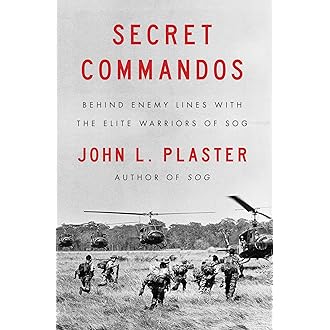
Secret Commandos
John L. Plaster
Plaster's follow-up to SOG — deeper into the Laos and Cambodia missions.
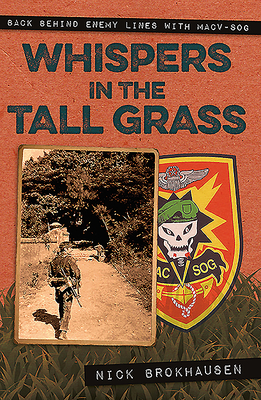
Whispers in the Tall Grass
Nick Brokhausen
Brokhausen's missions ran deep into Laos — the most recent SOG memoir.
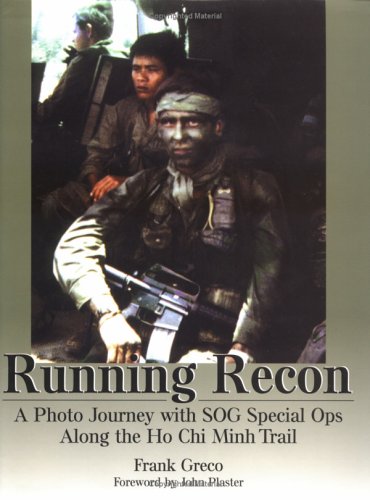
Running Recon
Frank Greco
Greco's photo-documented SOG missions along the Ho Chi Minh Trail — the most visual account of what cross-border recon actually looked like.