The Mekong Delta
SEALs, PBRs, and the brown water navy
The Mekong Delta — IV Corps — was a maze of rivers, canals, and rice paddies that the VC had dominated for years. The Navy SEALs, operating through the Phoenix Program and direct action platoons, became the most feared element of the pacification effort. The Delta was where SEAL Team One built its Vietnam legend.
By War & Fiction · Editorial standards and corrections
The Mekong Delta — IV Corps in American military parlance — was a world the Vietnamese had occupied for centuries and the Americans never fully understood. Four million people lived in the Delta's maze of rivers, canals, and rice paddies when American combat units arrived in significant numbers in 1966. The Viet Cong had been the dominant military and political force there since the early 1960s. They collected taxes, administered villages, recruited fighters, and moved freely through a population they had spent years cultivating and intimidating. The NVA Main Force presence was lighter in the Delta than elsewhere — the VC local and provincial forces handled most of the fighting — but the infrastructure sustaining them was deep and resilient.
Conventional American infantry units were poorly suited to the Delta. Large formations moving through rice paddies were visible miles away, channeled by water obstacles into predictable routes, and unable to mass the firepower that offset their disadvantages in other terrain. The Viet Cong had no such limitations. They moved at night, in small units, along canal routes they knew from childhood. They could cache weapons and blend into the civilian population. Finding them, let alone fixing and destroying them, required a different approach.
SEALs in the Delta
SEAL Team One's deployment to the Mekong Delta beginning in 1966 changed the operational equation in specific, measurable ways. The Teams brought capabilities the conventional forces lacked: the ability to operate in small units at night, to move through water obstacles that stopped infantry patrols, and to develop and exploit intelligence at the platoon level rather than waiting for corps-level analysis. A SEAL direct action platoon could receive intelligence on a VC infrastructure target in the evening, plan and rehearse an assault, and execute the raid before dawn — a cycle that conventional units measured in days or weeks.
Richard Marcinko's Rogue Warrior documents the early Delta operations, including his time commanding a direct action SEAL platoon before moving to the Rung Sat. Marcinko's account requires reading with awareness of his subsequent legal history and his known tendency toward self-aggrandizement, but the operational picture it paints — the intelligence preparation, the patrol execution, the specific methods SEALs used to move through Delta terrain — matches the documentary record well enough to be useful.
The Phoenix Program and PRU Operations
The Phoenix Program in the Delta gave SEALs a mission that went beyond direct action raids: advising and sometimes leading Provincial Reconnaissance Units (PRUs), indigenous forces tasked with targeting the Viet Cong political and logistical infrastructure. The PRUs operated with considerably more flexibility than American units — they were not subject to the same targeting restrictions, operated deeper in VC-controlled territory, and were often led by officers with years of experience fighting the specific networks they were now targeting.
Phoenix became controversial for documented abuses and remains so. It was also effective: the VC cadre it targeted were not replaceable at scale. Local leaders who had spent years building relationships, collecting intelligence, and organizing local support for the guerrilla campaign could not simply be substituted with less experienced men. The Phoenix operations in the Delta degraded VC infrastructure during 1968–1972 in ways that conventional operations couldn't replicate, and the NVA's post-1975 accounts acknowledged the program as one of the more damaging elements of the American effort.
The Brown Water Navy
SEAL operations in the Delta depended on the River Patrol Force — Task Force 116 — the Navy's brown water navy of PBRs (Patrol Boat, River) and river assault craft. The brown water navy had its own culture, its own operational methods, and its own mortality rate. Moving at speed on illuminated rivers in fiberglass boats, PBR crews operated in an environment where a single B-40 rocket could kill a crew of four. They inserted SEAL patrols, extracted them under fire, and conducted their own interdiction operations against water-borne VC logistics.
Gene Wentz's Men in Green Faces provides the most tactically detailed account of Delta SEAL operations from the platoon level — the missions, the specific challenges of Delta terrain, and the operational culture of the Teams at their most combat-effective. Dick Couch's The Warrior Elite, though primarily about BUD/S training, captures the culture and doctrine of the SEAL teams that came out of Vietnam: how the experience of the Delta shaped the selection standards, the training philosophy, and the institutional values that the Teams carried into subsequent decades.
What the Delta Built
The Mekong Delta was where SEAL Team One built its Vietnam reputation. The direct action tactics, the intelligence integration, the small-unit night operations — all of it was refined in the Delta's terrain and validated against an adversary who was extremely good at what they did. The VC's ability to operate in the Delta was not primarily a function of ideology or bravery. It was a function of professional skill developed over many years. That the SEALs were able to contest it at all was a substantial achievement; that they degraded it meaningfully was a testament to both the Teams' capabilities and the Phoenix Program's targeting intelligence.
The methods developed in the Delta were carried back to the Teams and became foundational to how American special operations forces think about denied-area direct action: small units, precise intelligence, night operations, rapid execution, and extraction before the enemy can organize a meaningful response. The Delta was a laboratory as much as a battlefield, and the lessons it produced are still operational.
READ NEXT — BOOKS ON THIS OPERATION
Amazon and Audible links are provided for convenience; we do not earn commissions from these purchases.

Rogue Warrior
Richard Marcinko
Marcinko's SEAL career began in the Delta — the original account.
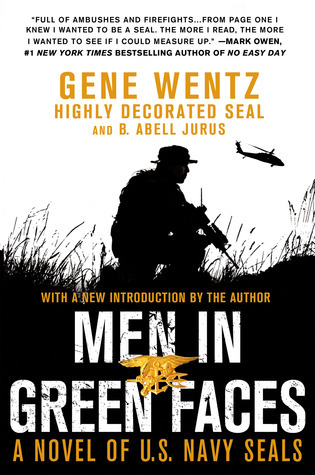
Men in Green Faces
Gene Wentz
Delta SEAL platoon memoir — vivid and technically detailed.

The Warrior Elite
Dick Couch
Couch's account of BUD/S training captures the culture and doctrine of the SEAL teams that operated in the Mekong — the book that explains how these men were made.