The Rung Sat Special Zone
SEALs, ambushes, and the waterlogged killing ground south of Saigon
The Rung Sat — Vietnamese for 'Forest of Assassins' — was a 400 square mile tidal swamp strangling the shipping lanes into Saigon. VC units used it as a sanctuary and staging area for attacks on vessels moving through the Long Tao River. The Navy SEALs became the primary American force tasked with clearing it.
By War & Fiction · Editorial standards and corrections
The Rung Sat Special Zone was a strategic nightmare wearing the disguise of a swamp. Stretching 400 square miles southeast of Saigon, it straddled the Long Tao River — the only deep-water shipping channel connecting South Vietnam's capital to the South China Sea. Every ton of military equipment, every barrel of fuel, every crate of ammunition bound for Saigon had to pass through it. The Viet Cong understood this before the Americans arrived and turned the mangrove forest into a fortress they'd spent years perfecting.
The Vietnamese name translates to "Forest of Assassins." That wasn't metaphor. VC Main Force units used the Rung Sat as a sanctuary, a staging area, and a platform for mining operations against river traffic. The tidal patterns flooded and drained the swamp twice a day, turning fixed defensive positions into obstacles that moved with the water. Trails that existed at low tide disappeared at high. The jungle canopy was too thick for useful aerial observation. Ground patrols sank to their waists in mud before they reached any objective worth reaching. Conventional infantry units sent into the Rung Sat accomplished little and took casualties doing it.
Why the SEALs
The Navy's answer was SEAL Team One. Beginning in 1966, SEAL platoons deployed to the Rung Sat on 90-day rotations, running direct action raids and intelligence-gathering operations in an environment that rewarded the small-unit skills the Teams had been built around. A six-man SEAL patrol could move through tidal swamp at night, hit a VC infrastructure target, and extract before the enemy could organize a response. They operated in an environment that degraded every advantage conventional forces brought — firepower, vehicles, logistics — while amplifying the advantages that made the Teams distinctive: fieldcraft, patience, physical endurance, and the ability to operate at night in terrain that everyone else avoided.
The operations were not glamorous. SEALs spent hours chest-deep in black water, moving through mangrove roots, navigating by compass in total darkness, reaching objectives that often turned out to be empty. When targets were present, actions were violent and brief. The Rung Sat rewarded patience and punished noise. A patrol that compromised its position before reaching its objective had failed, regardless of what happened next.
Phoenix and the Intelligence War
The Rung Sat operations ran alongside the broader Phoenix Program — the joint CIA and military effort to dismantle the Viet Cong Infrastructure (VCI) by targeting the political and logistical networks that sustained guerrilla operations. In the Rung Sat, this meant identifying and neutralizing the local VC tax collectors, couriers, and cadre who maintained the Main Force units' ability to operate. Phoenix was controversial during the war and remains so: it was effective at degrading VC infrastructure and it produced documented abuses. Both things were true simultaneously.
Richard Marcinko — who would later found SEAL Team Six — commanded direct action platoons in the Rung Sat during this period. His memoir Rogue Warrior documents what those operations actually looked like from the inside: the intelligence preparation, the patrol planning, the execution, and the institutional friction between Navy SEALs who had developed effective methods and the conventional military hierarchy that didn't always understand what they were doing or why it worked. Marcinko's voice is unreliable in specific details — he was court-martialed years later and his accounts require cross-referencing — but the operational picture he paints of the Rung Sat matches the documentary record.
The Lessons That Built SEAL Culture
The Rung Sat was one of three environments that shaped SEAL Team One's Vietnam identity — alongside the Mekong Delta and the coastal operations further north. Each environment tested different capabilities: the Delta demanded small-boat navigation and direct action; the coast required hydrographic reconnaissance and amphibious skills; the Rung Sat demanded pure jungle and swamp work, patience above anything else, and the ability to conduct sustained operations in an environment that was physically hostile around the clock.
What the Teams learned in the Rung Sat became foundational to how American special operations forces think about denied-area operations. Small units, moving at night, in terrain the enemy considered impassable, targeting the infrastructure rather than the uniformed fighters — these principles didn't originate in the Rung Sat, but they were refined there in ways that shaped doctrine for the next fifty years.
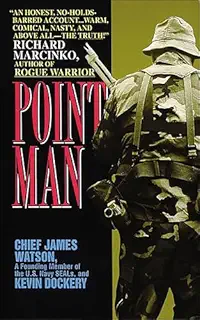
James Watson's memoir Point Man and Gary R. Smith and Alan Maki's Death in the Jungle provide the ground-level view that Marcinko's more strategic account sometimes misses: what it felt like to be a junior SEAL on a Rung Sat patrol, what the swamp smelled like, what it meant to hold your breath in black water while an enemy patrol passed close enough to touch. The operational history and the memoir account together give a complete picture that neither provides alone.
READ NEXT — BOOKS ON THIS OPERATION
Amazon and Audible links are provided for convenience; we do not earn commissions from these purchases.

Rogue Warrior
Richard Marcinko
Marcinko ran direct action platoons in the Rung Sat — this is the inside account.
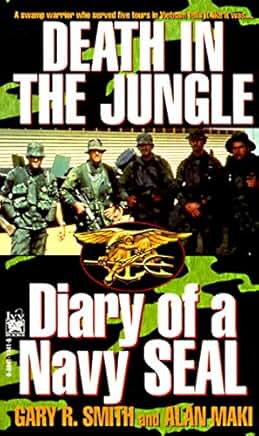
Death in the Jungle
Gary R. Smith & Alan Maki
Delta/Rung Sat SEAL operations — the most tactically detailed account of this AO.