The DMZ and the North Vietnamese Border
SOG Recon Teams on the most dangerous ground in Southeast Asia
The DMZ and the border region with North Vietnam was the domain of MACV-SOG's most elite Recon Teams. Running deep into denied territory, these six-man teams (two Americans, four indigenous) gathered intelligence, planted sensors, and occasionally snatched prisoners — all while being vastly outnumbered.
By War & Fiction · Editorial standards and corrections
The demilitarized zone between North and South Vietnam was six miles wide and was, in practice, neither demilitarized nor a zone. The North Vietnamese Army used the DMZ's protected status as cover for moving troops and supplies south. American conventional forces could not cross it. American special operations forces — specifically MACV-SOG — could, and did, constantly.
MACV-SOG's Command and Control North (CCN), headquartered at Da Nang, ran Recon Teams into the DMZ corridor and across the border into North Vietnam itself. These were six-man teams — typically two Americans and four indigenous soldiers from the Montagnard tribal groups or the Nung, ethnic Chinese mercenaries who had been fighting Communists since before the Americans arrived. The Americans were almost always Special Forces NCOs or officers. The indigenous team members were often veterans who had been running cross-border missions since the early 1960s, before MACV-SOG formally existed.
The Ground Truth
The DMZ corridor was the most heavily defended terrain in Southeast Asia. The NVA maintained anti-aircraft battalions, dedicated hunter-killer teams whose sole mission was locating and destroying American recon patrols, and a communication network that could have armed men at any infiltration point within hours of a team's insertion. The NVA understood that small recon teams were how the Americans found targets for their air strikes and artillery. Destroying those teams was an operational priority.
Recon Teams going into the DMZ or across the North Vietnamese border faced a specific set of problems that differed from operations further south. The terrain provided less cover — the DMZ's cleared buffer zone and the more open terrain of the North Vietnamese piedmont meant teams could be spotted at distance. The distances from extraction points were greater. Air support was more contested. And the consequences of compromise were more severe: a team caught close to the DMZ could not expect a quick helicopter extraction. The nearest friendly forces might be thirty minutes away under fire, in terrain that made landing zones difficult to find.
John Plaster's Recon Teams
John Plaster served multiple tours with MACV-SOG, commanding Recon Teams in the exact corridor this article covers. His book SOG: The Secret Wars of America's Commandos in Vietnam remains the definitive account of what cross-border recon operations actually required — not the mythologized version, but the operational reality: the intelligence preparation before each mission, the rehearsals, the insertion procedures, the immediate action drills every team practiced until they were automatic, and the extraction procedures that determined whether a compromised team lived or died.
Plaster is specific in a way that most Vietnam memoirs are not. He explains why certain infiltration routes were chosen, what aerial photography analysis could and could not tell the planners, how teams communicated their position while maintaining noise discipline, and what the difference was between a team that was being tracked and a team that was being hunted. That granularity is what makes SOG essential for understanding this operational environment rather than just knowing that it existed.
What Recon Teams Were Actually Doing
The primary mission of CCN Recon Teams in the DMZ corridor was road-watch: observing NVA infiltration routes and reporting what was moving south, in what quantities, at what times. Secondary missions included prisoner snatches — capturing NVA soldiers for intelligence exploitation — planting sensors and seismic devices along infiltration routes, and calling in air strikes or artillery on targets of opportunity. Occasionally teams conducted direct action missions against specific high-value targets.
The intelligence these teams produced shaped American bombing and artillery campaigns throughout the war. The NVA knew this. The contest in the DMZ corridor was fundamentally about whether American small units could maintain persistent surveillance in denied territory, or whether NVA hunter-killer tactics could blind American intelligence. It was a war within the war, conducted by dozens of men at a time, with consequences that rippled through campaigns involving hundreds of thousands.
John Stryker Meyer's Across the Fence provides the individual-level account that Plaster's more analytical work does not: what it was like to be a 20-year-old Special Forces NCO on a six-man team inserted into the North Vietnamese border area, managing the specific tension between the mission's requirement for silence and the human need to react when things went wrong. Meyer's FOB-1 teams ran into the same terrain Plaster analyzed, and his first-person account makes the operational picture visceral in a way that no after-action report can replicate.
READ NEXT — BOOKS ON THIS OPERATION
Amazon and Audible links are provided for convenience; we do not earn commissions from these purchases.
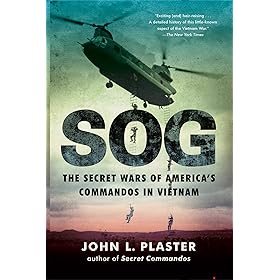
SOG
John L. Plaster
Plaster commanded Recon Teams in this exact corridor — the definitive account.
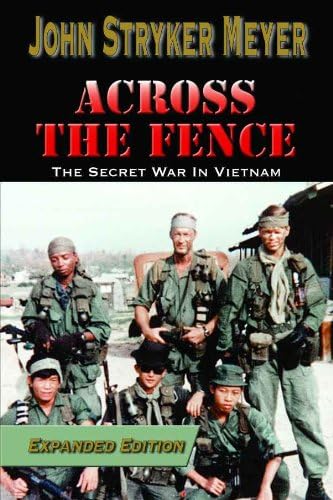
Across the Fence
John Stryker Meyer
Meyer's FOB-1 teams ran missions along this border — first-person and detailed.
We Few
Nick Brokhausen
Brokhausen's RT ran cross-border missions — unfiltered and operationally precise.