Where Do Fantasy Races Come From?
Elves, dwarves, goblins, and dragons didn't start in Tolkien — tracing the real mythology behind every fantasy staple
Every fantasy world is built from the same raw materials: elves with longbows, dwarves with axes, goblins in tunnels, dragons on mountains, wizards with staffs. These archetypes feel inevitable because they appear in almost every major fantasy property — D&D, Tolkien, Spellmonger, Forgotten Ruin. But they come from somewhere. Norse mythology, Celtic folklore, medieval bestiaries, and one very particular Oxford professor assembled the template that fantasy has been iterating on ever since.
Every fantasy world uses the same cast of characters. Elves: tall, ancient, sharp-eared, connected to nature or magic. Dwarves: short, stubborn, underground, expert metalworkers. Goblins: small, hostile, tactical, the reliable cannon fodder of fantasy fiction. Dragons: enormous, flying, fire-breathing, usually hoarding gold. Wizards: staff-carrying, knowledge-obsessed, long-bearded, often elderly. These aren't coincidences or lazy writing. They're a template so dominant it's become invisible — and it all traces back through one man to mythology that's nearly two thousand years old.
Before Tolkien: Where the Races Actually Come From
The Norse had two categories of elves: the Ljósálfar (light elves) and the Dökkálfar (dark elves), living in Álfheimr and Svartálfaheimr respectively. They were supernatural beings — neither gods nor humans — associated with fertility, nature, and hidden knowledge. They were also dangerous. Norse elves weren't the elegant, benevolent archivists of later fantasy. They were uncanny, capable of causing illness (the Old English word "aelf-adl" meant elf-disease), and their motives were never entirely readable. The connection to the natural world was real, but it carried a threat.
Dwarves in Norse mythology were craftsmen of unparalleled skill who lived underground, created the gods' most powerful artifacts, and were intrinsically connected to the earth itself. They made Mjolnir, Thor's hammer. They made Gungnir, Odin's spear. They made Gleipnir, the silk ribbon that bound Fenrir the wolf. Their craftsman nature, their underground habitation, and their connection to metals and forging all passed directly into modern fantasy with minimal modification. The Norse dwarves were already fantasy dwarves. The template was complete before Tolkien touched it.
Goblins have murkier origins. The word comes to English from the French "gobelin" — a demon associated with Évreux in Normandy, documented in the 12th century. Medieval Europe was full of small malicious spirits with different regional names: the German "kobold," the Celtic "clurichaun," the English "boggart." None of these were exactly the same creature, but they shared a family resemblance: small, tricksterish, inherently hostile to human order, and living in the margins of civilized space. Tolkien and D&D welded these regional variations into a single category of massed, organized cannon fodder that every fantasy property has inherited ever since.
Dragons appear in almost every major mythological tradition independently, which is remarkable enough to deserve acknowledgment. Norse mythology had Níðhöggr gnawing at the world tree. The Mesopotamians had Tiamat. Greek mythology had the Lernaean Hydra and the dragon guarding the Golden Fleece. Anglo-Saxon poetry — the tradition Tolkien knew best — had Beowulf's dragon, a creature sleeping on a gold hoard exactly as fantasy dragons do today. The fire, the flight, the gold, the overwhelming physical size: these weren't Tolkien's inventions. They were already canonical in the source material.
Wizards are the most recent archetype. The classic fantasy wizard — old, bearded, staff-carrying, bookish, enormously powerful but subject to strange limitations — doesn't have a clear ancient mythological analog. Merlin from the Arthurian tradition is the closest, and Tolkien's Gandalf is explicitly a synthesis of Merlin and the wandering figure of Odin (who also travels in disguise with a hat and staff). The wise old mentor with hidden power became so deeply embedded in the template that it's hard to imagine fantasy without it.
What Tolkien Actually Did
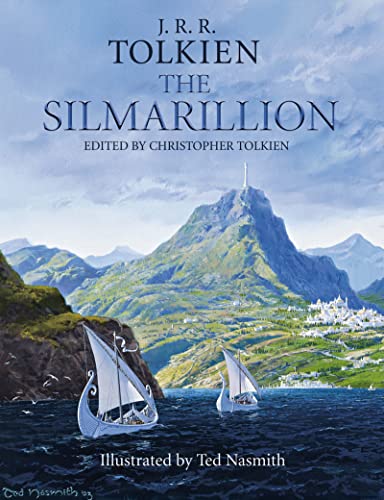
J.R.R. Tolkien didn't invent these races. He synthesized and systematized them. Tolkien was a professional philologist — a scholar of language and its history — who spent decades as an Oxford professor studying exactly the medieval and Norse texts where these creatures appear. He didn't read the mythology as source material for fiction. He read it as his primary academic subject, and then he built a mythology of his own using the same raw materials.
The synthesis involved two key decisions that changed fantasy forever. First, Tolkien gave each race a deep history — not just surface characteristics, but origin stories, languages, internal cultural variation, and genuine reasons for their nature. Elvish wasn't just "the elf language." It was a fully constructed linguistic system with documented phonetic evolution and multiple dialects. The Dwarves weren't just "short smiths." They had a creation myth, a diaspora history, a destroyed homeland, and a cultural trauma. The races became real because they were backed by the depth of actual mythology.
Second, Tolkien made the races' relationships to each other meaningful. Elves and dwarves in Norse mythology don't have a documented relationship. Tolkien built one — a long historical tension rooted in specific events, explained by specific cultural incompatibilities. The racial dynamics of Middle-earth feel real because they have causes. And because they have causes, every fantasy world that followed could borrow not just the archetypes but the relationship structures between them.
D&D and the Template Lock-In
Dungeons & Dragons, launched in 1974, was explicitly derived from Tolkien. Gary Gygax and Dave Arneson built the game on Tolkien's taxonomy — so directly that Tolkien's estate objected, which is why D&D uses "halflings" instead of "hobbits" and "orcs" instead of Tolkien's specific nomenclature. But the core template came from Middle-earth. D&D then spread that template to every player who learned the game from 1974 onward.
The D&D Monster Manual became the canonical reference for what these creatures are. An elf's Dexterity bonus, a dwarf's Constitution bonus, a goblin's challenge rating, a dragon's breath weapon — these are D&D systematizations of Tolkien archetypes that themselves derived from Norse mythology. The template got quantified. And once it was quantified, every fantasy property drawing from D&D (which is nearly all of them) was drawing from the same synthesis.
This is why Forgotten Ruin — a series about a modern Ranger company transported to a fantasy world — works so cleanly. The 75th Ranger Regiment soldiers recognize goblins immediately because goblins are already in their cultural vocabulary from decades of D&D. The magic system uses spell slots because D&D spell slots are the dominant mental model for how magic works. The fantasy world's internal logic is legible to any reader who's spent time with either D&D or Tolkien-derived fantasy because the template is that pervasive.
Why the Template Keeps Working
The honest answer is that the template works because the source mythology was genuinely good. Norse mythology didn't survive for a thousand years because it was arbitrarily compelling — it survived because it addressed something real about how humans think about the natural world, about skill and craft, about the uncanny, about creatures that are almost-but-not-quite human. Tolkien recognized that depth and preserved it in accessible form. D&D preserved and quantified what Tolkien built. Forty years of fantasy fiction has been iterating on the same underlying template.
The fantasy properties that work best — Spellmonger, Forgotten Ruin, the Red Rising saga's color-coded castes — succeed not by abandoning the template but by finding something new in it. Spellmonger's goblins have genuine internal politics and tribal hierarchies rather than just being cannon fodder. Forgotten Ruin's elves have their own cultural agenda that isn't immediately readable to the Rangers who encounter them. The underlying categories are the same Norse-to-Tolkien-to-D&D taxonomy. The creative work is in finding what hasn't been explored in those categories yet.
What the Archetypes Still Have Left
Two thousand years of mythology and fifty years of fantasy publishing have been working the same archetypes, and there's still room in them. The military fiction crossover has barely started. Forgotten Ruin asked what happens when professional soldiers encounter D&D creatures and was the first property to really commit to a serious answer. The question of what a properly organized military doctrine looks like when applied to a world where elves have 300-year lifespans and collective memory, where dwarves have fortified underground positions and industrial metalworking capability, where goblin hordes can be tactically outmaneuvered but outnumber you forty to one — these are still essentially unexplored.
The races come from mythology because mythology is where we put the things we don't have words for: the forest that feels dangerous but inviting, the craftsman whose skill is almost supernatural, the small creature that subverts civilization from its margins, the ancient predator that dominates from above. Putting those archetypes in a fantasy world and then dropping modern soldiers into that world is just the latest iteration of a tradition that started in Norse sagas. The template has held for a reason. It's built on material that describes something permanent about how humans understand the world.
READ NEXT — BOOKS ON THIS OPERATION
Affiliate links — as an Amazon Associate we earn from qualifying purchases.