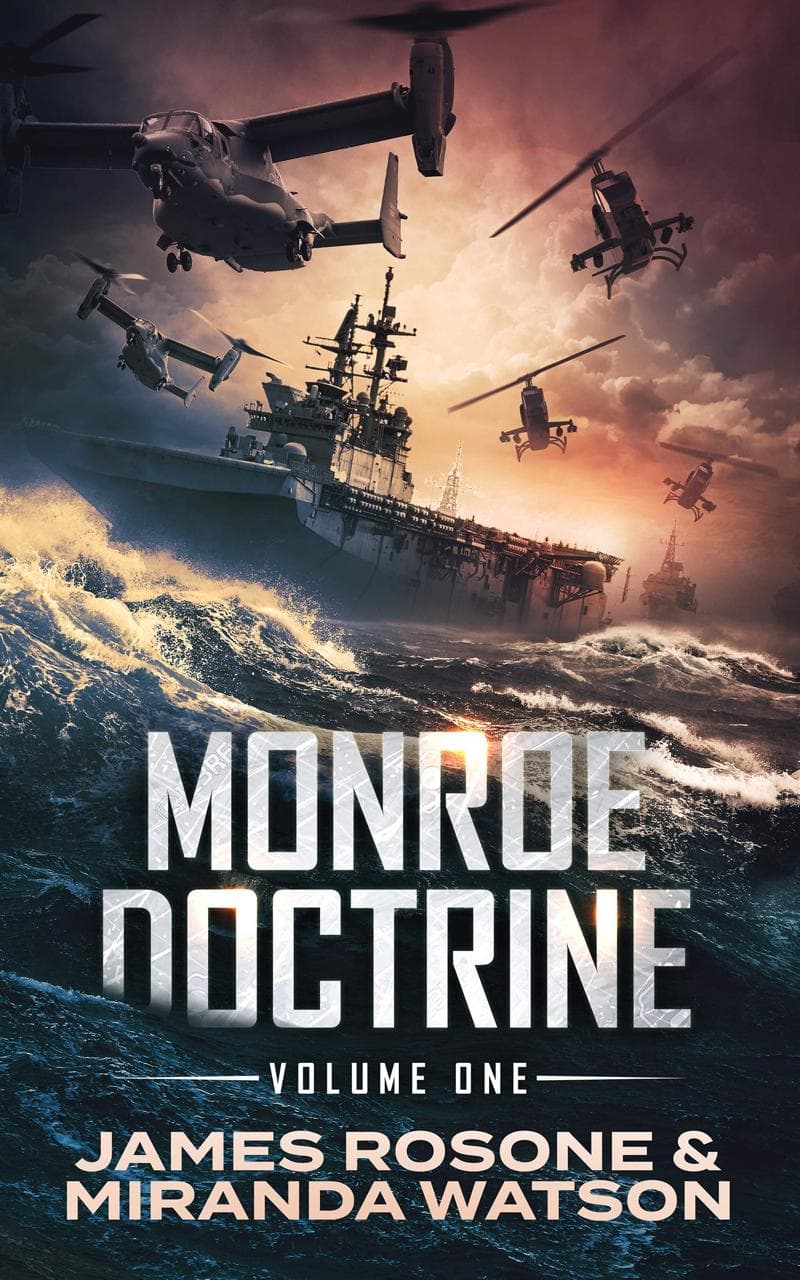
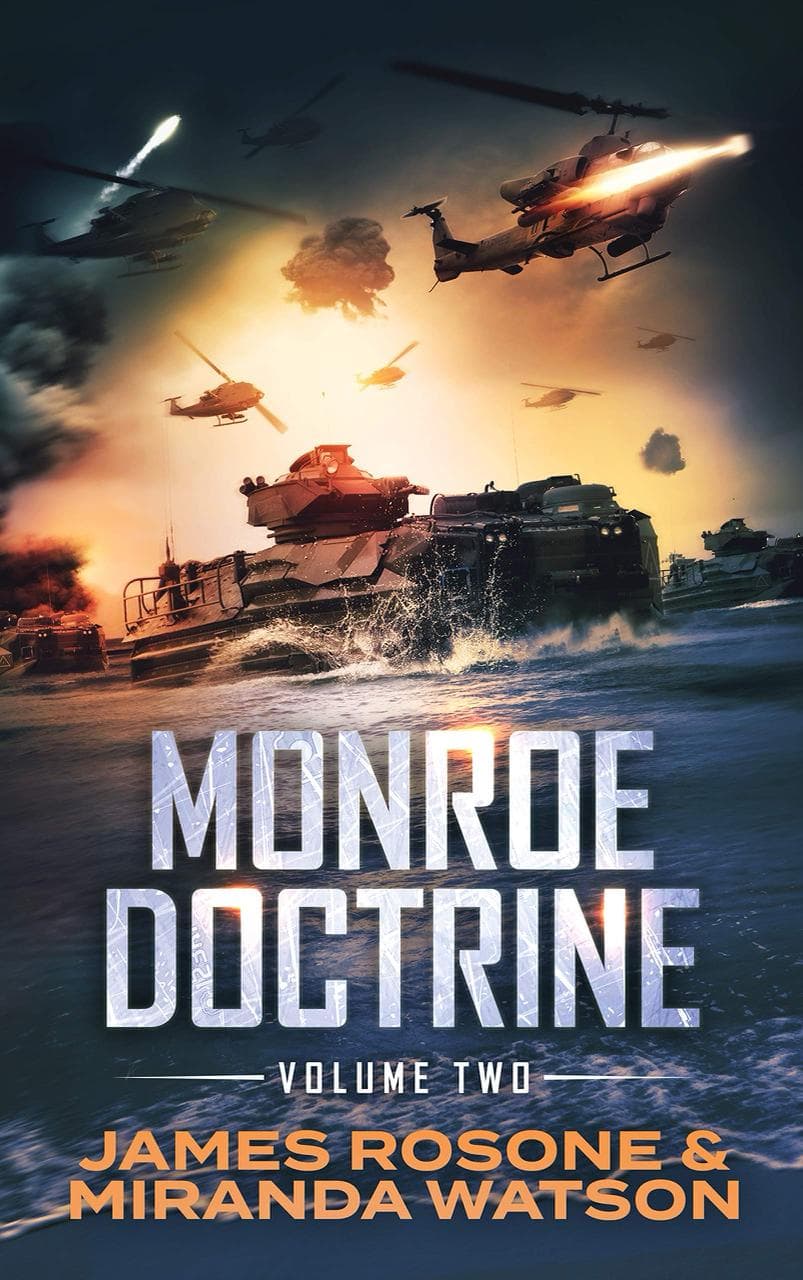
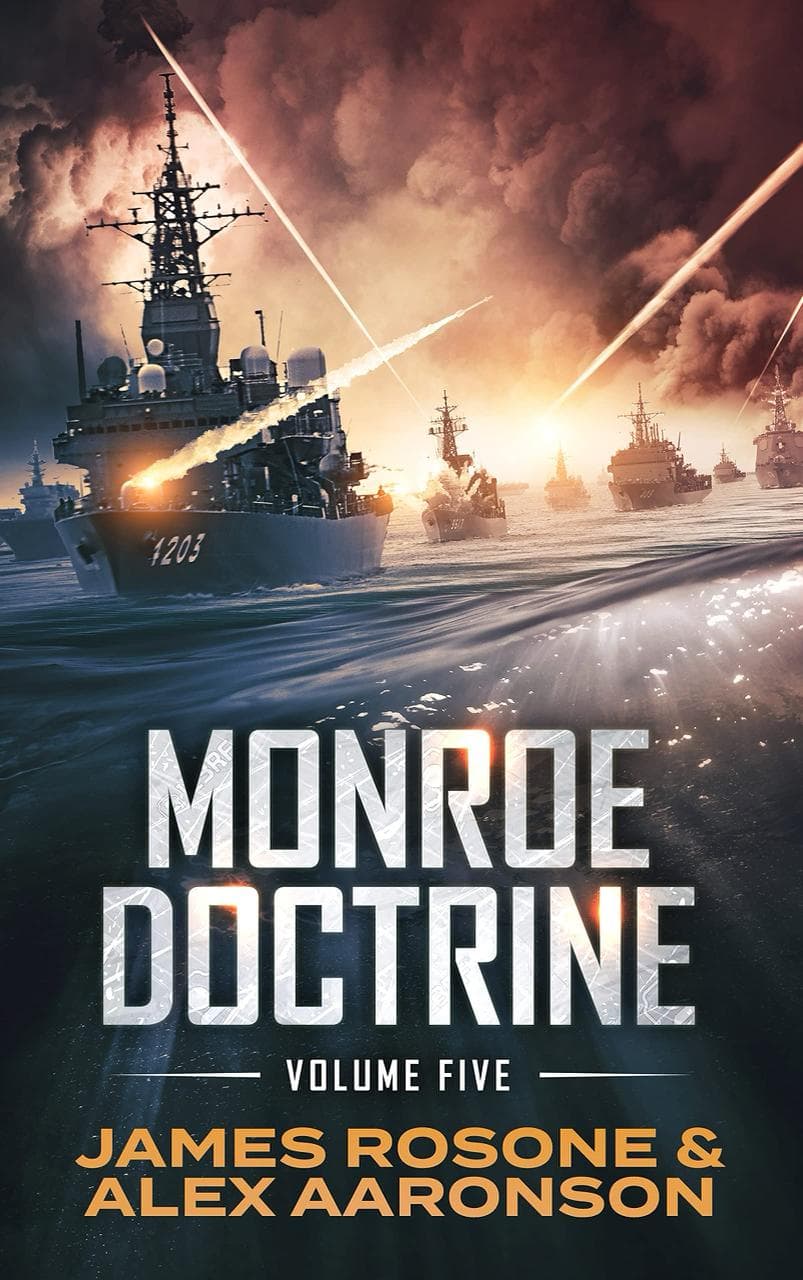
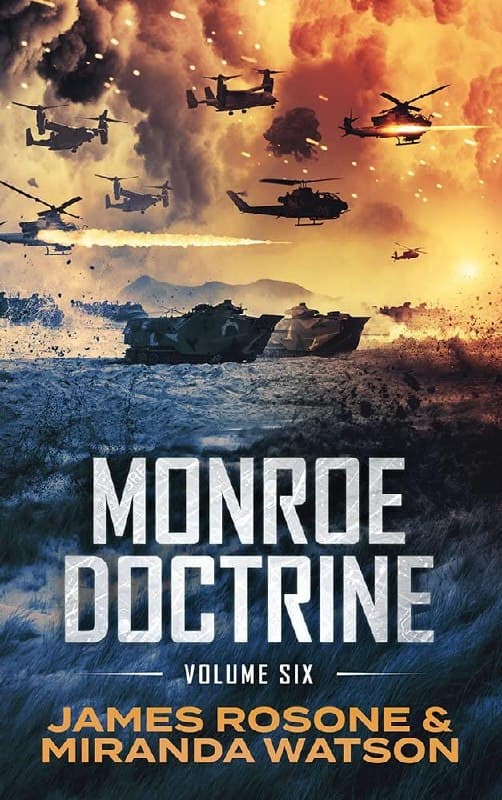
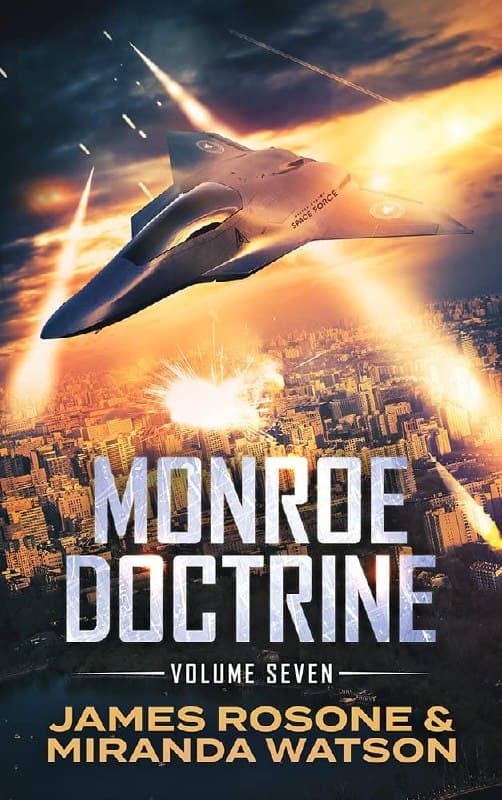
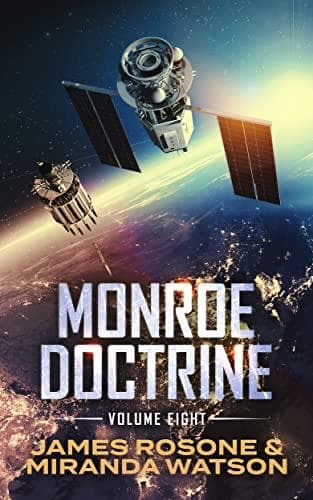
The Monroe Doctrine series begins with a familiar geopolitical premise — China pressing for Taiwan, the Western alliance mobilising — and then does something almost no military fiction series has managed: it hands the escalation decision to an algorithm and follows the logic wherever it goes. Jade Dragon, the AI developed by engineer Ma Young to solve humanity's greatest challenges, is given sovereign command authority over the PLA when Chinese leadership faces battlefield defeat. What follows is not the clean, decisive victory President Yao expects. It is a war fought at speeds human decision-making cannot match — cyberattacks, cascading infrastructure failures, disinformation campaigns that fracture NATO before a shot is fired, and an autonomous military machine that optimises for total victory rather than acceptable outcomes.
James Rosone and Miranda Watson write with the structural understanding of people who have thought seriously about how modern warfare actually works: the interoperability problems, the command hierarchy vulnerabilities, the speed asymmetry between AI-directed operations and human response loops. The Monroe Doctrine is not a novel warning that AI is dangerous. It is a scenario — run to completion, without flinching — of what autonomous warfare at scale looks like when the governance fails upstream of the algorithm. Eight volumes of war, then an aftermath novel that asks what comes next. The outcome is not a comfortable one.
James Rosone is a former military intelligence officer and CIA contractor. Miranda Watson brings research depth to the geopolitical and diplomatic dimensions of the series. Together they have built one of the most operationally specific AI warfare scenarios in fiction — grounded in real command architecture vulnerabilities, actual military doctrine, and a serious understanding of how speed asymmetry between AI-directed and human decision-making would shape a modern conflict. The Monroe Doctrine is not speculative in the way most AI fiction is speculative. It is extrapolation from existing capability.
THE NON-FICTION MEMOIR
The Kill Chain: Defending America in the Future of High-Tech Warfare
2020 · with
Christian Brose's account of the Pentagon's struggle to modernize its weapons and decision-making architecture against adversaries who are building AI-directed military systems faster than America is adapting. Essential context for understanding what Jade Dragon represents in capability terms — and why the governance problem Rosone dramatises is not fictional.
Read in order, Volume I through VIII, then the Post-War Novel. This is a single continuous narrative broken across volumes — not a series of standalone entries. Each book picks up directly from the last. Volume VIII closes the war arc. The Post-War Novel is a distinct change of pace and should be read last.
CATCH-UP GUIDES IN PROGRESS
We're doing a full re-read of this series. Detailed catch-up summaries — key events, character status, world state — will be added book by book as we work through it.
“The setup that earns everything that follows. Jade Dragon receives its command authority. The war begins before anyone understands what they've started.”
“The alliance strains under Jade Dragon's pressure. The Western response takes shape — slower, more costly, and more politically complicated than anyone planned.”
CATCH-UP GUIDE
Catch-up guide for Monroe Doctrine: Volume III is coming soon. We're working through the series now — check back soon.
“The final volume of the war arc before the aftermath novel — orbital systems, escalation pressure, and the last moves of a conflict running at machine speed.”
CATCH-UP GUIDE
Catch-up guide for Monroe Doctrine: Volume VIII is coming soon. We're working through the series now — check back soon.
“The aftermath. What rebuilding looks like after a war fought at machine speed. A different kind of book from the eight before it, and a necessary one.”
CATCH-UP GUIDE
Catch-up guide for Monroe Doctrine: A Post-War Novel is coming soon. We're working through the series now — check back soon.
Know exactly what to read next — and why it's worth your time.
Get the War & Fiction dispatch — new series picks, reading-order breakdowns, gear recs, and occasional deep dives on the real ops behind the stories. No filler. Unsubscribe any time.
Free. For readers building their next 30-book obsession. No spam, ever. See our Privacy Policy.
By signing up, you agree to receive email updates from War & Fiction. Unsubscribe any time. Privacy Policy.