Nuclear Safeguards: What They Can—and Cannot—Prevent
Use controls, presidential authority and why safeguards are not a guarantee against nuclear war
Nuclear safeguards address unauthorized use and accidents. They do not eliminate escalation risk or remove the president’s authority to order nuclear use.
By War & Fiction · Editorial standards and corrections
Correction: This article previously overstated the protection offered by nuclear safeguards and blurred political authorization with execution procedures. It also treated surviving past crises as proof of future safety. Those claims have been revised.
Different protections address different problems
Weapon safety, physical security and controls against unauthorized use are related but distinct responsibilities. Sandia National Laboratories describes its nuclear weapon safety and security engineering as complementary to the physical protection provided by the military and the National Nuclear Security Administration.
Those protections matter. Their existence does not answer every question about a crisis, an authorized order or the risk of escalation. A system designed to resist unauthorized use still needs to carry out an authorized decision.
What a permissive action link does
Sandia’s published history describes the permissive action link as a coded electromechanical lock developed to prevent unauthorized weapon use. That is a specific security function. It should not be turned into a blanket claim that any weapon without a code is harmless in every circumstance, or that identical arrangements exist across every weapon system.
People, orders and authority
Procedures requiring more than one person are not the same as requiring a second political decision-maker to approve nuclear use. The Congressional Research Service identifies the president as the sole authorization authority. Authentication and implementation involve others; lawful orders remain subject to the laws of armed conflict.
This is the distinction to keep in mind when a film shows crews checking an order. Verifying its authenticity and carrying it out are different responsibilities from deciding national policy.
Why accidents still deserve attention
Schlosser’s Command and Control is a useful starting point for the history of accidents and weapons management. Its account of the Damascus accident connects an individual event to larger institutional questions. Publisher’s description and excerpt.
The fact that a particular accident did not produce a nuclear detonation does not establish that every safeguard worked perfectly or that future risk is zero. History offers evidence to examine, not a guarantee to extend indefinitely.
Watch, then read more widely
The Watch: America’s Nuclear Mission offers a documentary entry point into the people performing the mission. Our updated guide to who controls nuclear weapons links to the official series website and connects the series to investigative nonfiction, Cold War history, a hypothetical scenario and fiction.
The books below serve different purposes. Command and Control examines accidents and institutions; The Dead Hand broadens the historical perspective; Nuclear War: A Scenario explores a constructed escalation pathway. None should be treated as a complete description of current classified procedures.
READ NEXT — NUCLEAR SAFETY AND DECISION-MAKING
Amazon and Audible links are provided for convenience; we do not earn commissions from these purchases.

Command and Control
Eric Schlosser
Investigative nonfiction about nuclear weapons management and accidents, including the 1980 Damascus Titan II missile accident.
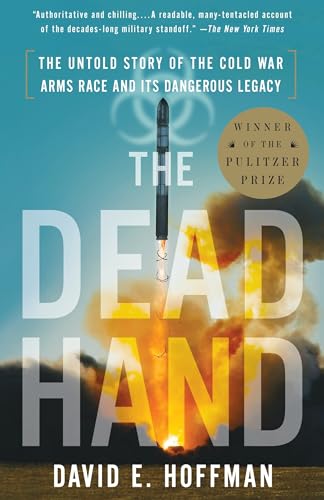
The Dead Hand
David E. Hoffman
A history of the late Cold War arms race and its legacy, bringing the Soviet perspective into the reading list.
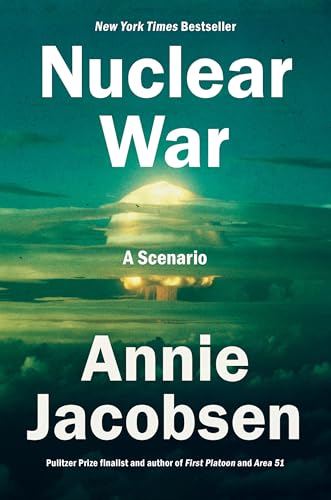
Nuclear War: A Scenario
Annie Jacobsen
A reported hypothetical scenario of nuclear escalation. Read as an exploration of a possible pathway, not a prediction or an official plan.